
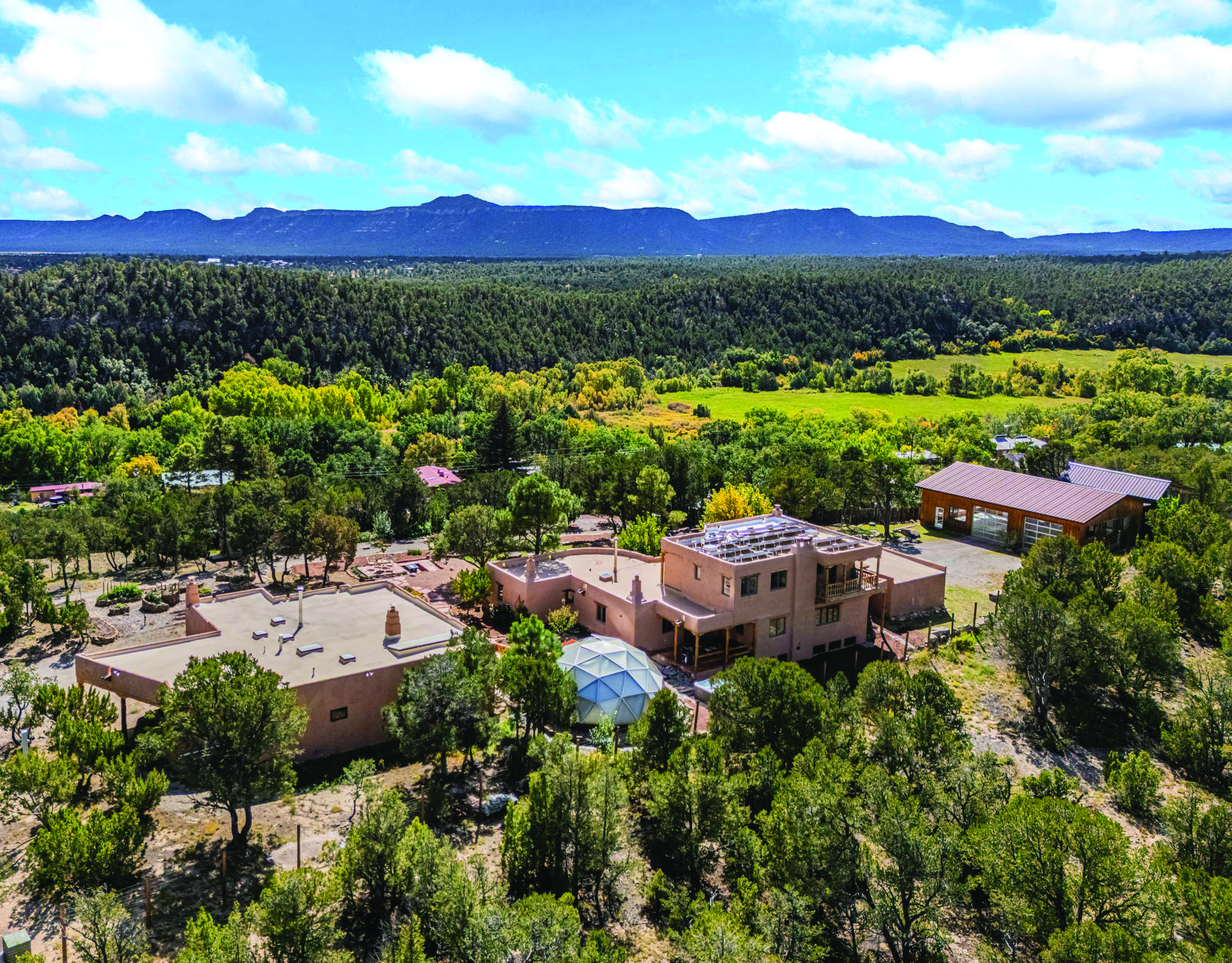
Walk through enough Santa Fe listings and you will see the same line item show up over and over: guest casita. Sometimes it is a converted garage. Sometimes it is a freestanding adobe with its own portal and walled garden. Sometimes it is a finished basement that someone is calling a casita with a little optimism. The label covers a lot of ground, and what you are actually buying — and what you can legally do with it — varies more than most buyers realize until they are well into a transaction.
If a casita or guest house is on your list of must-haves, here is what is worth understanding before you start writing offers.
What counts as a casita in Santa Fe?
In Santa Fe, the words casita, guest house, and accessory dwelling unit (ADU) get used almost interchangeably. The city’s land development code uses ADU as the technical term. A casita is the local, friendlier name for the same thing — a secondary dwelling unit on a residential lot, either attached to the main house or built as a detached structure.
To be a legal ADU under the City of Santa Fe code, the unit generally needs its own kitchen, bath, and living area, must be smaller than the primary residence, and is capped at roughly 1,500 square feet depending on lot size and zoning. ADUs are allowed by right in most residential zones — attached, detached, garage conversions, or second-story additions all qualify. That permissive posture is unusual in the Southwest, and it is one of the reasons casitas are such a recognizable feature of the Santa Fe housing stock.
A “guest room with a kitchenette” is not a casita. Neither is a finished basement without a separate entrance and a full bath. If the unit does not meet the ADU definition, calling it a casita in a listing does not make it one, and you cannot rent it out or refinance it on that basis.
Permitted, grandfathered, or unpermitted?
This is the first question to ask, and the answer is not always in the MLS sheet.
- Permitted — the casita was built or converted with a city permit, inspected, and is recorded as a legal ADU. This is the cleanest scenario and what most buyers should be looking for.
- Grandfathered — the structure predates current code and was approved under earlier rules. Often legal to keep, but adding plumbing or expanding it may trigger a full code-compliance review.
- Unpermitted — the unit was built or converted without permits. These exist all over Santa Fe, especially on older lots. They may function fine, but they create real risk: an unpermitted casita is not legally rentable, may not appraise, and can become an expensive problem if a future buyer or insurer asks for documentation.
Ask your agent to pull the permit history before you write an offer. If the casita is unpermitted, factor the legalization cost — drawings, code upgrades, fees — into your offer price.
Can I rent out a casita short-term?
Sometimes — but the rules are tighter than most out-of-state buyers expect, and they have been getting tighter, not looser. Under the City of Santa Fe’s short-term rental ordinance, a property owner with an ADU can apply for a short-term rental permit, but the owner must actually live on-site in either the primary residence or the casita itself. Pure investor STRs of a casita on a property where the owner does not live are not permitted in residential zones.
Even with a permit, there is a frequency cap: in residential zones you can rent the unit once in any seven-day period. The cap is lifted between November 15 and January 15 to account for holiday demand. Outside the city in Santa Fe County, a 2024 ordinance went further and capped the total number of non-owner-occupied short-term rental permits — meaning that in many parts of the county, a new STR permit may simply not be available right now.
If your business case for buying the property depends on running the casita as an Airbnb, get the regulatory side answered before the inspection contingency expires. The pencil math on STR income only works if the permit is actually available.
Casitas in the historic districts
Santa Fe has five historic districts, including the Downtown & Eastside District, which covers much of the Historic East Side and the area around Canyon Road. If the property is inside a historic district, any exterior change — including building or significantly modifying a detached casita — has to be reviewed by the Historic Preservation Division and, in most cases, approved by the Historic Districts Review Board. The HDRB meets the second and fourth Tuesday of each month.
This is not just paperwork. The review covers massing, materials, parapet heights, window proportions, and how the new structure reads against the existing streetscape. Plans that would be routine elsewhere in the city — a modern stucco box with large glazed openings, for example — may need real revision to fit. Budget for design fees and a longer permitting timeline if the casita you want to build sits inside the boundary.
How a casita affects value (and why appraisals can disappoint)
A well-built, permitted casita is a real asset. It gives you a place for visiting family, a long-term rental that can offset the mortgage, a home office that is genuinely separate from the house, or a place to age in place while a future owner uses the main residence. In the Santa Fe market specifically, where multi-generational living and out-of-town visitors are common, casitas tend to be one of the most requested property features after views and walkability to the Plaza.
That said, the appraisal math often surprises sellers. Building a casita typically runs $70,000 to $120,000 or more — and on a custom adobe in a historic district, it can run well past that. Appraisers, working from sales comps, will frequently assign the casita a contributory value of $20,000 to $50,000, because direct comparables are scarce and lenders are conservative about how much a secondary structure adds. The unit can still be the deciding factor in why a buyer chooses your house over another, but the dollar-for-dollar return on construction cost is usually weaker than owners expect.
What to look for during the walk-through
- Separate utilities or sub-metering. If you plan to rent long-term, separately metered electric and gas make life much easier. Most older Santa Fe casitas are not separately metered.
- True separation. A casita that shares an interior wall, an HVAC system, and a single hot water heater with the main house lives differently than one with its own systems and its own walled entry.
- Adobe and stucco condition. Detached casitas, often older outbuildings that were converted, can have drainage and moisture issues at the base of the walls. Look at the lower courses of stucco and the surrounding grade.
- Heating type. Many older casitas are heated only by a kiva fireplace and a small wall unit. Comfortable in October, less so in January at 7,200 feet.
- Parking and access. Particularly on smaller East Side lots, where to park a renter’s car can become a real problem and can affect your eligibility for permits.
A short word on Santa Fe County
The discussion above is mostly about properties inside the City of Santa Fe. Many of the homes buyers fall in love with — in Eldorado, Tesuque, La Cienega, Las Campanas, parts of the Westside — are in Santa Fe County, which has its own land development code, its own permitting process, and a stricter recent posture on short-term rentals. If the property is outside the city limits, ask specifically whether the casita was permitted by the county and what the current STR cap status is for that area.
The honest bottom line
A casita is one of the most flexible things you can own on a Santa Fe property — and one of the easiest features to misjudge during a fast-moving transaction. The two questions that matter most are simple: is it actually a permitted ADU, and what are you allowed to do with it under current rules? Get clear answers to both before you fall in love with the floor plan.
Webster Estates publishes plain-spoken coverage of the questions Santa Fe buyers and sellers actually run into — neighborhoods, property types, market notes, and the practical mechanics of buying and selling here. If you are working through whether a particular casita property makes sense, start with our Santa Fe real estate hub or get in touch directly.
Buying Land in Santa Fe County: A Practical Guide to Lots, Water, Septic, and Building