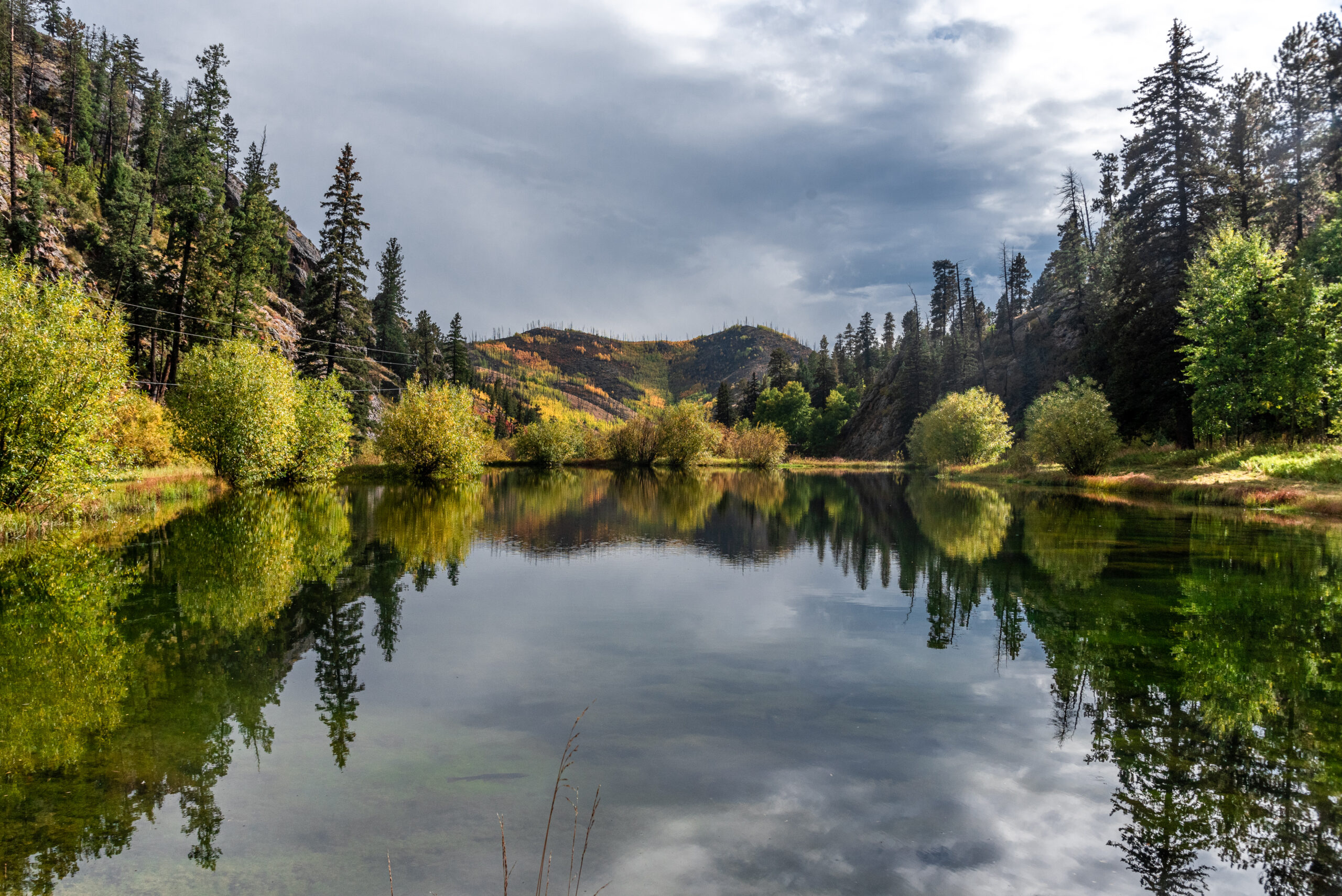
A vacant lot in Santa Fe County looks simple from a listing photo — pinon, juniper, a long view east to the Sangre de Cristos. The complications live underground and on paper: where the water comes from, where the waste goes, what the county will let you build, and whether the deed actually carries the water rights you assumed it did. None of these are deal-killers, but each one can move the all-in cost of a buildable lot by tens of thousands of dollars. This is what an out-of-state buyer should walk in knowing.
What does land cost in Santa Fe County?
The county-wide median sits around $22,000–$23,000 per acre as of mid-2026, but that figure hides enormous variation. A 2-acre lot in Eldorado with utilities at the property line behaves very differently from a 40-acre parcel off a dirt road north of Pojoaque. Rough ranges to orient yourself:
- Eldorado (1–2 acre lots, utilities available): roughly $80,000–$200,000 per lot, depending on view, road frontage, and whether the lot has a perc test on file.
- Las Campanas (gated, 1.5–4 acres): typically $250,000–$900,000+ per lot, with golf-frontage and ridge lots at the top of the range.
- Tesuque, Tano Road, Galisteo Basin (5–40 acre rural parcels): $200,000 to well over $2M depending on water, access, and views.
- Outlying parcels (La Cienega, La Cieneguilla, southern county): $15,000–$50,000 per acre on larger raw parcels with no infrastructure.
The cheap-looking listing is almost always cheap for a reason — usually access, water, or both. Treat any per-acre number under $10,000 as a flag, not a bargain.
Water: well, hauled, or city service
How a property gets water shapes everything that follows — appraisal, lender requirements, what you can plant, even how many people can live there. In Santa Fe County there are three realistic answers.
Municipal or community water. Inside the City of Santa Fe and within certain county utility districts (Eldorado is the largest example), you tap into a system. Costs and connection fees vary by district, but you avoid drilling, pumps, and the geology lottery entirely.
Domestic well. Most rural lots rely on a 72-12-1.1 domestic well permit from the New Mexico Office of the State Engineer. A single-household permit is capped at 1.0 acre-foot per year — about 326,000 gallons, which sounds like a lot until you start watering anything outdoors. Within county water-utility service areas, you also need a separate county domestic well permit, even after the state issues yours. Drilling depths range from a couple hundred feet on the east side of town to 800+ feet in parts of the Estancia Basin, with corresponding cost swings.
Hauled water with a cistern. On parcels where wells fail or where drilling is uneconomic, owners truck water in and store it in a cistern. It works — many beautiful homes run this way — but lenders ask harder questions, and the operational reality (scheduling deliveries, monitoring level) is real.
Water rights are separate from the land
This is the single biggest surprise for buyers from states where water and land travel together. In New Mexico, a water right is not automatically conveyed with a fee interest in land. The seller may own irrigation rights from an acequia, a transferable diversion right, or nothing at all — and the deed will not necessarily make this clear.
If you are paying any premium for “water” — pasture, an orchard, a pond, an acequia ditch crossing the property — get a water-rights search done by a qualified attorney or specialist before closing. The Office of the State Engineer’s online Water Rights Reporting System is the public record; reading it correctly takes practice. The cost of confirming what you’re actually buying is trivial compared to learning a year later that the water you assumed was yours belongs to a neighbor.
Septic: perc test first, then everything else
Almost every rural parcel in Santa Fe County is on a private septic system permitted by the New Mexico Environment Department. Before you commit to a lot, you want a percolation test — or, if the seller already has one on file with the NMED, you want to see it.
Rough Santa Fe-area costs:
- Perc test: typically $750–$1,900, plus a small NMED permit application fee.
- Conventional septic install (tank plus leach field): roughly $5,000–$10,000 in normal soil conditions.
- Engineered or aerobic systems (required when soils fail percolation or on small lots): $15,000–$30,000+.
The systems must be installed by a licensed contractor holding an MM-1, MM-98, MS-1, or MS-3 license. A lot that fails percolation isn’t unbuildable, but the engineered-system math changes your project budget materially.
What can you build, and who decides?
Outside the city limits of Santa Fe, Edgewood, and Española, all building and development falls under the county’s Sustainable Land Development Code (SLDC), and you need a development permit from Santa Fe County before you can break ground. The SLDC governs setbacks, lot coverage, height, hillside development, dark-sky lighting, and access standards.
Three constraints catch first-time builders most often:
- Hillside and ridgeline restrictions. Slopes over 20% and ridgeline-visible building envelopes trigger additional review and, often, design changes.
- Access and driveway standards. A lot without legal recorded access — or with a steep, narrow approach — may need a costly easement or engineered driveway before it’s truly buildable.
- HOA architectural review. Las Campanas, Eldorado, Aldea, and most planned communities layer architectural review on top of county rules. Materials, roof pitch, color, and exterior lighting are all governed by guidelines that can be stricter than the SLDC itself.
The “Code of the West” disclosure is worth actually reading
Santa Fe County publishes a document called Rural Living in Santa Fe County (adopted as Resolution 2010-233, often called the local Code of the West). It exists because new rural buyers consistently underestimate what country living involves — dirt roads in snow, lengthy fire department response times, neighbors with livestock, hunting on adjacent land, and no expectation of cable or trash pickup at the curb.
It is not legally binding, and it is not exciting reading. It is, however, an honest summary of the realities your future neighbors already accept. Read it before you decide whether 15 minutes from a paved road is a feature or a problem.
A reasonable buying sequence for a Santa Fe County lot
For buyers new to the market, this sequence avoids most of the expensive surprises:
- Identify the area and infrastructure profile you want (utilities-in vs. well-and-septic).
- Get a real estate broker who has closed vacant-land deals in Santa Fe County specifically — residential-only experience is not the same skill set.
- Before earnest money: confirm legal access, view the most recent survey, and pull the SLDC zoning for the parcel.
- During the inspection period: order a perc test if one isn’t on file, get a water-rights search if any rights are being claimed, and price out the well or utility hookup.
- Get a contractor or architect to walk the lot and give a real number on site work — grading, driveway, utility runs from the road. This is where lots silently become 25% more expensive.
- Confirm HOA architectural review timelines and any required submittals before closing, not after.
The lot itself is rarely the most expensive part of a Santa Fe build. The site work, the well, the engineered septic, the long utility runs — that’s where the budget moves. Knowing it in advance is the difference between a project you finish and one you abandon halfway through.
Webster Estates covers Santa Fe real estate for buyers, sellers, and the curious — neighborhood guides, market notes, and the practical questions buyers actually ask. For a list of local lenders, surveyors, septic installers, and inspectors familiar with Santa Fe County land deals, see our real estate resources.