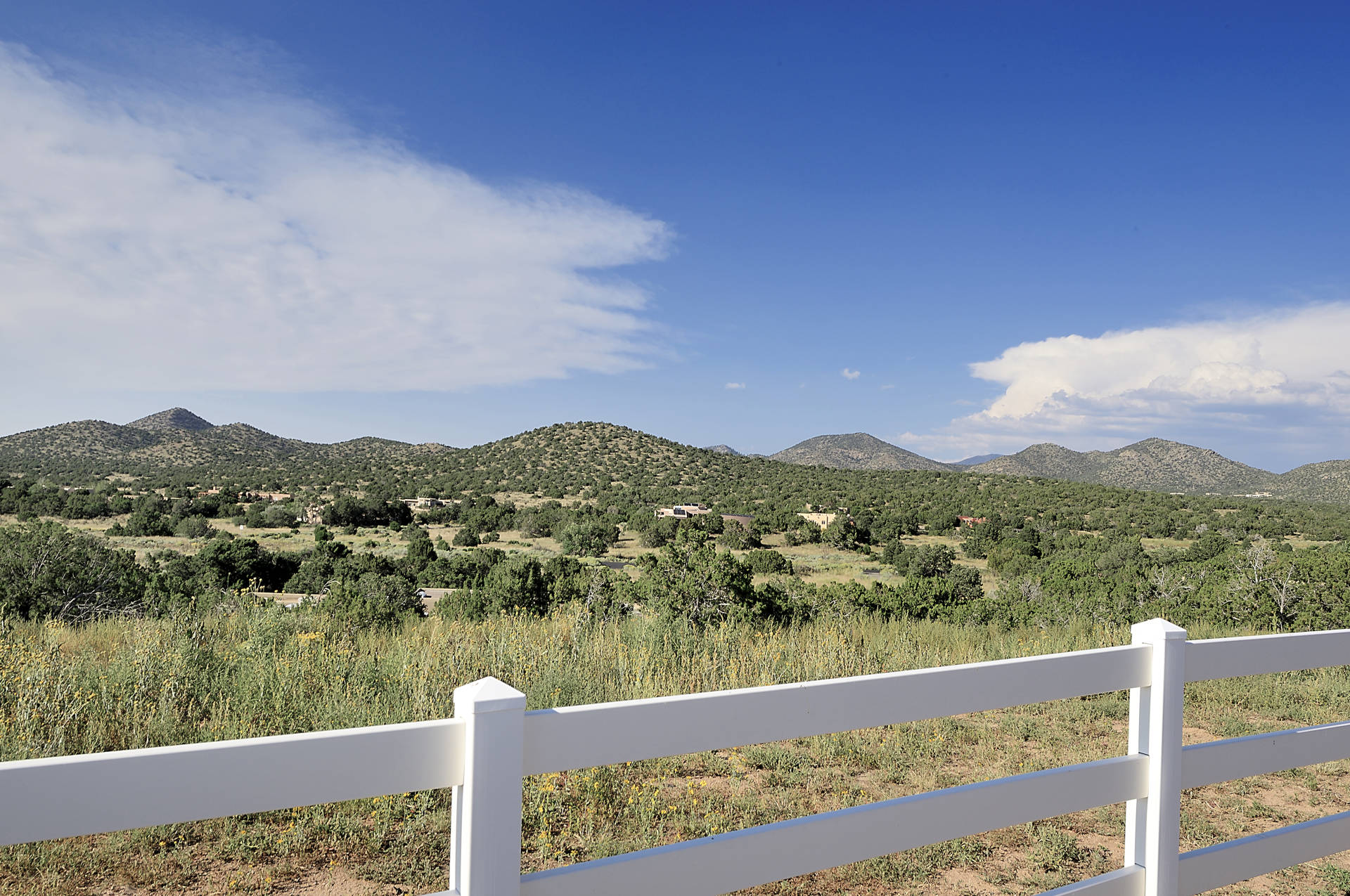
Drive twenty minutes southeast from the Plaza along US-285 and the city falls away. The land flattens into rolling piñon-juniper grassland, the Sangre de Cristos sit on the northern horizon, and the houses start appearing on one- and two-acre lots, set back from the road, low to the ground, the color of the dirt. This is Eldorado at Santa Fe — a planned community of about 2,760 homes that started selling lots in 1972 and is now home to roughly 6,000 people. For out-of-state buyers shopping Santa Fe, it is the most common alternative people consider once they realize the in-town historic neighborhoods are smaller and pricier than they expected.
Eldorado is not Santa Fe proper. It is a Census-Designated Place in unincorporated Santa Fe County, with its own school, its own water utility, its own grocery store, and its own civic identity. Whether that distance from downtown is a feature or a bug depends entirely on what you came to Santa Fe for.
Where Eldorado is, and what the land looks like
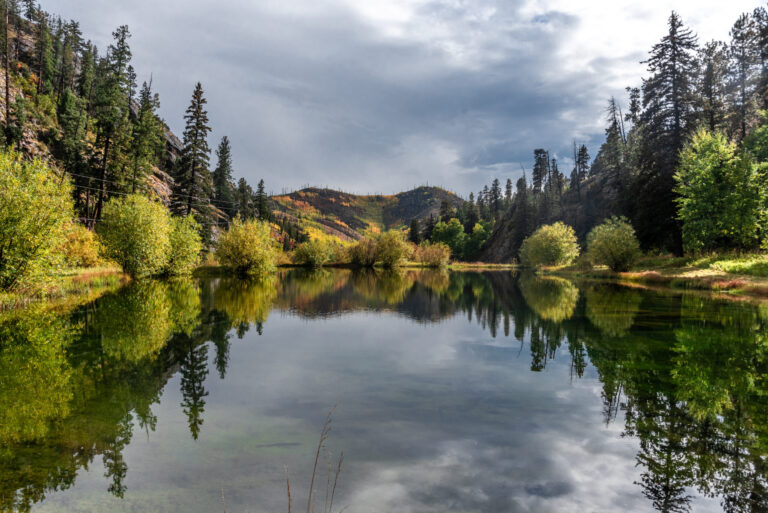
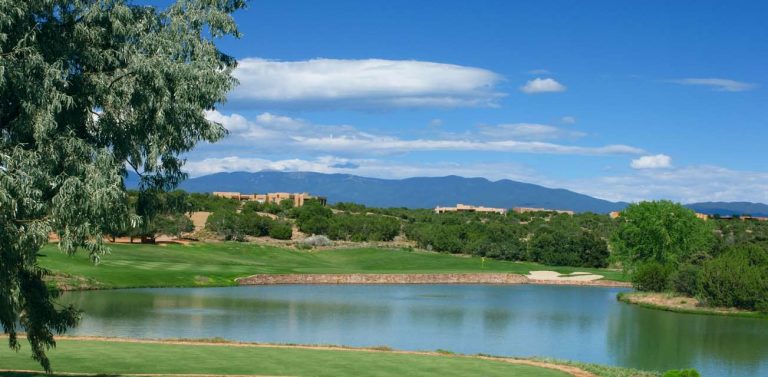
The community sits along US-285 between Santa Fe and Lamy, about 15 to 20 minutes from downtown depending on the time of day and where in Eldorado you are. The terrain is high desert grassland at roughly 6,500 feet of elevation — open, exposed, and noticeably different from the wooded foothills closer to town. Lots are large by Santa Fe standards: most are 1 to 2 acres, and the original master plan deliberately spread houses out rather than clustering them. The result is a low-density, horizontal landscape where you can usually see your neighbor’s house but rarely hear it.
The community borders the Galisteo Basin Preserve to the south, which gives residents direct access to a network of hiking and mountain biking trails that extends for miles into protected open space. Eldorado is also a designated dark-sky community, with outdoor lighting restrictions written into the covenants. On a clear night the Milky Way is genuinely visible from a back portal.
The architecture: regulated, regional, and unusually solar
Eldorado was launched in the middle of the 1970s energy crisis, and the developer marketed it as a passive-solar community from day one. Many of the original homes were built with thick stuccoed walls, south-facing glass, earth berms on the north side, and trombe walls — a masonry wall behind glass that absorbs heat during the day and releases it overnight. It is still considered one of the largest passive-solar communities in the country.
Architecturally, the community is tightly regulated. The covenants effectively rule out anything that would clash with the landscape — no Victorian peaks, no all-glass contemporaries, no exterior colors outside the earth-tone palette. What you find instead is the standard Northern New Mexico vocabulary: flat roofs with parapets, vigas, portals, stuccoed adobe-look walls in tans and pinks and clay reds. Most homes read as Pueblo Revival or Territorial. Newer custom builds lean cleaner and more contemporary while staying within the regional materials and colors.
For buyers used to suburban subdivisions elsewhere in the country, this consistency is one of the first things to register. There is no architectural outlier on the block. The community looks like the land it sits on.
What does a home in Eldorado cost?
As of early 2026, the median list price in Eldorado is roughly $745,000, and the average sale price is in the high $600s — up about 12% year over year. Active inventory has been running around 22 homes, with another 17 or so under contract at any given time. The price range on the market typically runs from about $499,000 at the entry end to $1.3 million for newer custom builds on the larger lots.
Practically, here is what those numbers buy:
- Entry tier ($500K–$650K): Original 1970s and 1980s passive-solar homes, typically 1,500–2,000 sq ft, often needing updates to kitchens, baths, and HVAC. Solid bones, dated finishes.
- Middle tier ($650K–$900K): Larger or renovated homes, 2,000–2,800 sq ft, sometimes with casitas or detached studios. The bulk of active inventory.
- Upper tier ($900K–$1.3M+): Newer custom builds on premium lots, often with mountain views, contemporary interiors within the regional shell, and full passive solar plus photovoltaic.
The competition level is moderate — Redfin scores the market around 46 out of 100, which is closer to balanced than the in-town historic neighborhoods, where well-priced listings still move in days. In Eldorado, buyers have more room to think.
Water, schools, and the practical infrastructure
One of the most useful things to know about Eldorado, especially if you are coming from a state where you have never thought about water in your life, is that the community has its own water utility. The Eldorado Area Water and Sanitation District (EAWSD) operates 10 primary wells drawing from the Galisteo Basin aquifer, with about 2.5 million gallons of storage and roughly 3,000 connections. Almost every home in Eldorado is on this community system. You are not drilling your own well, and you are not negotiating an acequia share, both of which are common considerations elsewhere in Santa Fe County.
The district produces what it describes as high-quality groundwater with minimal treatment required. Worth knowing: about 15% of private wells tested in the broader Eldorado area have shown elevated arsenic, which is a common feature of New Mexico groundwater. EAWSD-served homes are on the utility’s treated supply, not those private wells, but if you are looking at any property in the area that is on a private well rather than the district, an arsenic test is non-negotiable.
Children in Eldorado are zoned to El Dorado Community School for K-8 and Santa Fe High School for 9-12. The K-8 sits inside the community, which is part of the appeal for families with young kids — the school bus ride is short, and the school is genuinely walkable from many of the closer-in streets.
What is actually in Eldorado, day to day
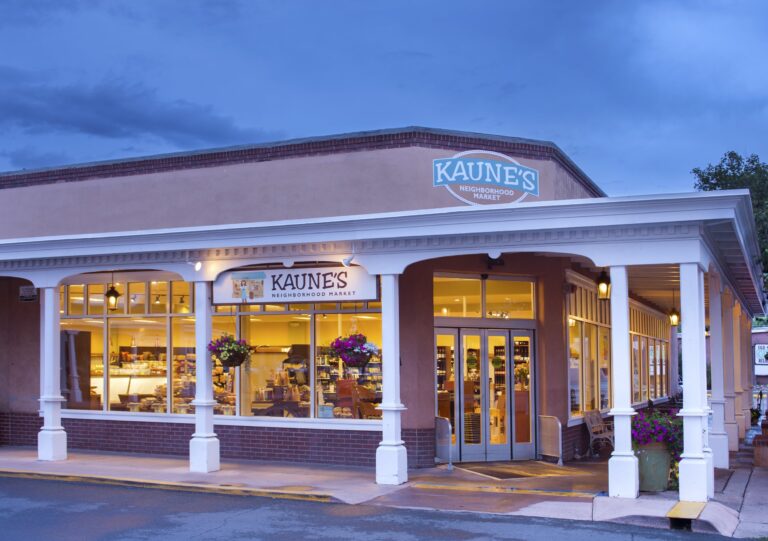
The Agora Shopping Center anchors the community’s commercial life. It contains the Super Market at Eldorado (a full-service grocery with a butcher and produce section, not just a convenience store), a pharmacy, a hardware store, a few restaurants, a coffee shop, and Vista Grande Public Library. None of this is downtown-level density. It is enough that you can live in Eldorado for a week without driving to Santa Fe, but not enough to substitute for the city if dining and culture are why you moved here.
The community also has roughly 65 horse stables run by residents who board for their neighbors, an active community center, and an unusual amount of trail access — paths along most of the road network plus the adjacent Galisteo Basin Preserve. The horse infrastructure is a real thing, not a brochure detail; if you are moving from a horse property out of state, it is one of the few Santa Fe-area communities where keeping a horse on your own land or boarding nearby is straightforward.
Who Eldorado is — and isn’t — a good fit for
Eldorado works well for buyers who want acreage, quiet, big skies, and trail access, and who are willing to drive to town for the things downtown Santa Fe is known for. It works particularly well for families with school-age kids, for remote workers who do not need to be near the Plaza, for horse owners, and for buyers who want a Santa Fe-style house at a noticeably lower per-square-foot price than the East Side or South Capitol.
It is a harder fit for buyers whose mental picture of Santa Fe is the Plaza, Canyon Road, and walking to a different restaurant every night. The drive from Eldorado into town is not bad — most days it is 20 to 25 minutes — but it is real, and it shapes how often you actually go. Buyers who realize this six months in sometimes wish they had paid more for a smaller in-town place.
Practical things to check before you make an offer
- The passive-solar systems. Trombe walls, roof glazing, and earth berms work well when maintained, but original 1970s and 1980s installations sometimes have failed seals, cracked glazing, or moisture issues behind the masonry. Have an inspector who knows passive solar look at them, not a generalist.
- The roof. Flat parapeted roofs in this climate are not flat — they are slightly sloped membranes that need recoating roughly every 5 to 10 years. Ask when it was last done.
- The well, if applicable. Most Eldorado homes are on EAWSD water, but some properties in the broader area are on private wells. If you are looking at one of those, do a current arsenic test.
- The covenants. The architectural review is real. If you have ambitions to add a metal-roofed addition, install above-roof solar in a visible spot, or paint the trim something non-earth-tone, read the covenants before you fall in love.
- The actual commute. Drive from the specific listing to wherever you will actually need to go — downtown, the Railyard, work, the airport — at the time of day you will normally make that trip. It changes the calculus.
Eldorado is one of the most distinctive planned communities in the country — an early solar experiment that aged into a genuinely well-functioning suburb of Santa Fe, with its own identity rather than as a generic bedroom community. For the right buyer it is the strongest value proposition in the Santa Fe area. For more on the broader market, neighborhoods, and what to expect as a buyer here, see Webster Estates’ Santa Fe real estate coverage.