Request More Information
Call 505-780-9500, or fill out the form below.


Ira Diamond Gerald Cassidy was born November 10, 1869, in Covington, Kentucky. He arrived in Santa Fe in 1912, in the same window that brought the first wave of artists who would, over the following decade, give what is now the Santa Fe art colony its shape. His wife, Ina Sizer Cassidy, was a writer and the editor whose voice carried much of the colony’s early prose record. Together the Cassidys are credited, in the language of subsequent scholarship, with helping to initiate the Santa Fe art school and movement.
Cassidy worked in oil, in pastel, and in large-scale mural. In 1915 his murals for the Indian Arts Building at the Panama-California International Exposition in San Diego won the exposition’s gold medal, a national career marker that established him as one of the country’s serious painters of Southwestern subject and indigenous portrait. His Santa Fe studio became one of the working addresses of the early colony.
He died on February 12, 1934, of turpentine and carbon monoxide poisoning sustained while painting the dome murals of the Santa Fe Federal Building. The commission was unfinished at his death. He was sixty-four. The Cassidy story is, in the longer arc, the story of an artist who built a city’s art identity and then died inside one of its civic ceilings.
In 1914 the Cassidys purchased the compound on the upper stretch of Canyon Road, well east of the gallery row at the gateway. The compound became their home and Gerald’s studio for the remaining two decades of his life. They named it the “House of Sunshine,” and the name has stayed attached to the property since.
The compound is a Spanish Colonial adobe, an original adobe main residence with two adobe guest houses arranged in the traditional courtyard organization. The Cassidys’ tenancy left material traces that still anchor the property: vigas, corbels, and structural beams brought from a Nambe Pueblo church and incorporated into the buildings; a working well dating to the mid-1700s; the gardens and the fountain arrangement on the south side of the compound. The buildings are the artifact of the period when Canyon Road was still residential and the colony was building itself one studio at a time.
Canyon Road runs east from Paseo de Peralta for roughly half a mile through what is now the most concentrated gallery corridor in Santa Fe. The lower blocks, closer to Paseo, hold the working galleries; the upper blocks, where 922 sits, hold the residential adobes that were the artists’ houses during the colony’s founding period. The Cassidy compound is among the oldest of these, and its provenance places it at the very beginning of the road’s identity as Santa Fe’s art street. The Gateway to Canyon Road at the lower end is another Webster Estates Select Sold.
For the corridor’s broader story and the upper-Canyon Road residential character, see our Canyon Road neighborhood guide and the Historic East Side neighborhood guide.
The Webster Estates team handled the sale of the Gerald Cassidy Estate at $2,492,888. Properties of the Cassidy compound’s combination of cultural provenance and material intactness do not turn often; the buyer pool is, by definition, the part of the Santa Fe market that knows the early colony history and wants to live inside one of its working chapters. We represented the property through marketing, showings, and close, working from our office at 54½ Lincoln Avenue on The Plaza.
Q: Who was Gerald Cassidy? A: Ira Diamond Gerald Cassidy (1869-1934) was a painter and muralist who moved to Santa Fe in 1912 and is credited as one of the founding figures of the Santa Fe art colony. He won the gold medal at the 1915 Panama-California International Exposition in San Diego for his Indian Arts Building murals. He died in 1934 of turpentine and carbon monoxide poisoning while painting the dome murals of the Santa Fe Federal Building.
Q: What is the “House of Sunshine” on Canyon Road? A: The “House of Sunshine” is the nickname Gerald and Ina Sizer Cassidy gave the Spanish Colonial adobe compound they purchased in 1914 on the upper stretch of Canyon Road. It served as their home and Gerald’s studio until his death in 1934.
Q: When did Gerald Cassidy live on Canyon Road? A: From 1914 until his death in 1934. The Cassidys arrived in Santa Fe in 1912 and purchased the Canyon Road compound two years later.
Q: What is the Cassidy Compound? A: The Cassidy Compound is a Spanish Colonial adobe complex on the upper stretch of Canyon Road, consisting of the original adobe main residence and two adobe guest houses. The compound incorporates vigas and corbels from a Nambe Pueblo church and includes a working mid-1700s well.
Q: What did the Gerald Cassidy Estate sell for? A: The estate sold for $2,492,888, handled by the Webster Estates team at Sotheby’s International Realty.
Q: Who was Ina Sizer Cassidy? A: Ina Sizer Cassidy was a writer and editor, and Gerald Cassidy’s wife. Together the Cassidys are credited in subsequent scholarship with helping to initiate the Santa Fe art colony of the early twentieth century.
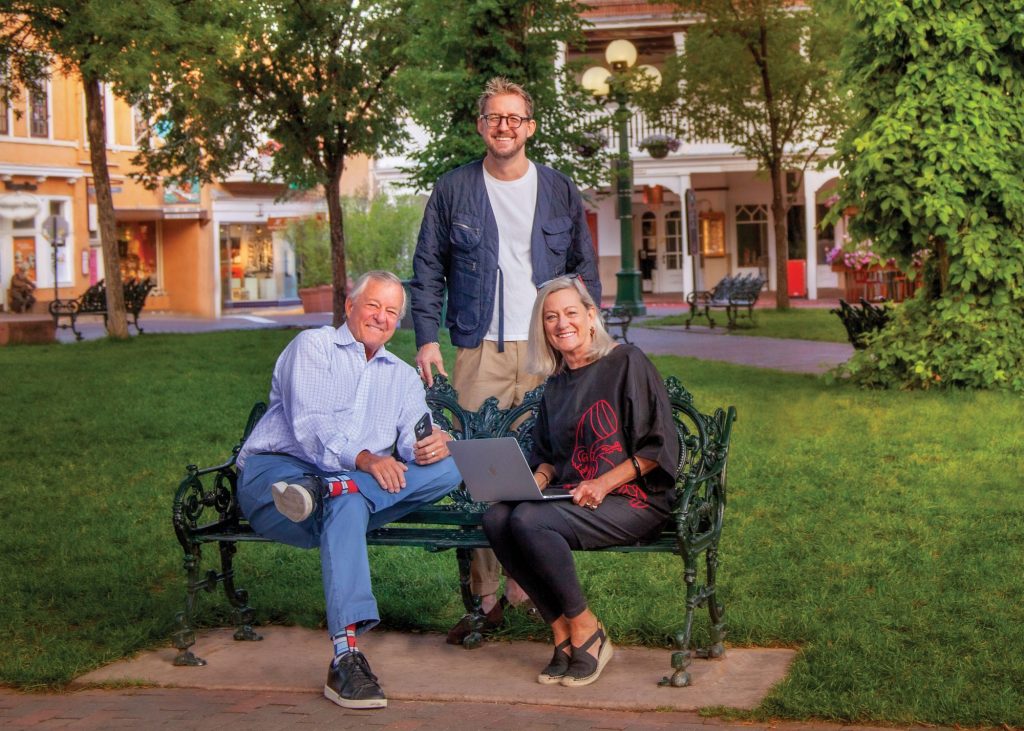
The Webster Estates Team handled this transaction. Chris Webster, Patti Webster, Christopher Webster III, and Paisley Mason Webster, Associate Brokers at Sotheby’s International Realty, operating from 54½ Lincoln Avenue on The Plaza since 1976.
Let's connect and discuss how we can help you enrich your Santa Fe experience.