The Historic East Side is Santa Fe at its most concentrated. The oldest established residential neighborhood in the city, anchored by the Plaza at its western edge and climbing east toward the foothills along streets that have been continuously occupied for centuries. It is the neighborhood most buyers picture when they imagine living in Santa Fe, and the one with the tightest inventory, the most demanding maintenance discipline, and the richest architectural texture in the city.
A brief history
Spanish settlement in what became Santa Fe radiated outward from the Plaza beginning in 1610. The streets immediately east of the Plaza (what is now East Palace Avenue, East Alameda, Garcia Street, Acequia Madre) were established along the acequia irrigation system that fed the early farms and orchards of the colonial city. Property lines from that period still shape the residential pattern. Many of the larger compound homes on the Historic East Side trace their lot histories back two or three centuries.
The neighborhood’s modern character was set in the 1910s and 1920s, when a generation of artists and patrons relocated to Santa Fe and chose the East Side to build, remodel, and add to. Carlos Vierra, Sheldon Parsons, Will Shuster, and others bought existing adobes and either preserved them or expanded them in what became the Pueblo Revival and Spanish Pueblo Revival idioms. The Historic East Side Historic District was later established to preserve this layered character, and most properties in the core of the neighborhood are subject to historic-preservation review.
Architecture: a working museum of Santa Fe styles
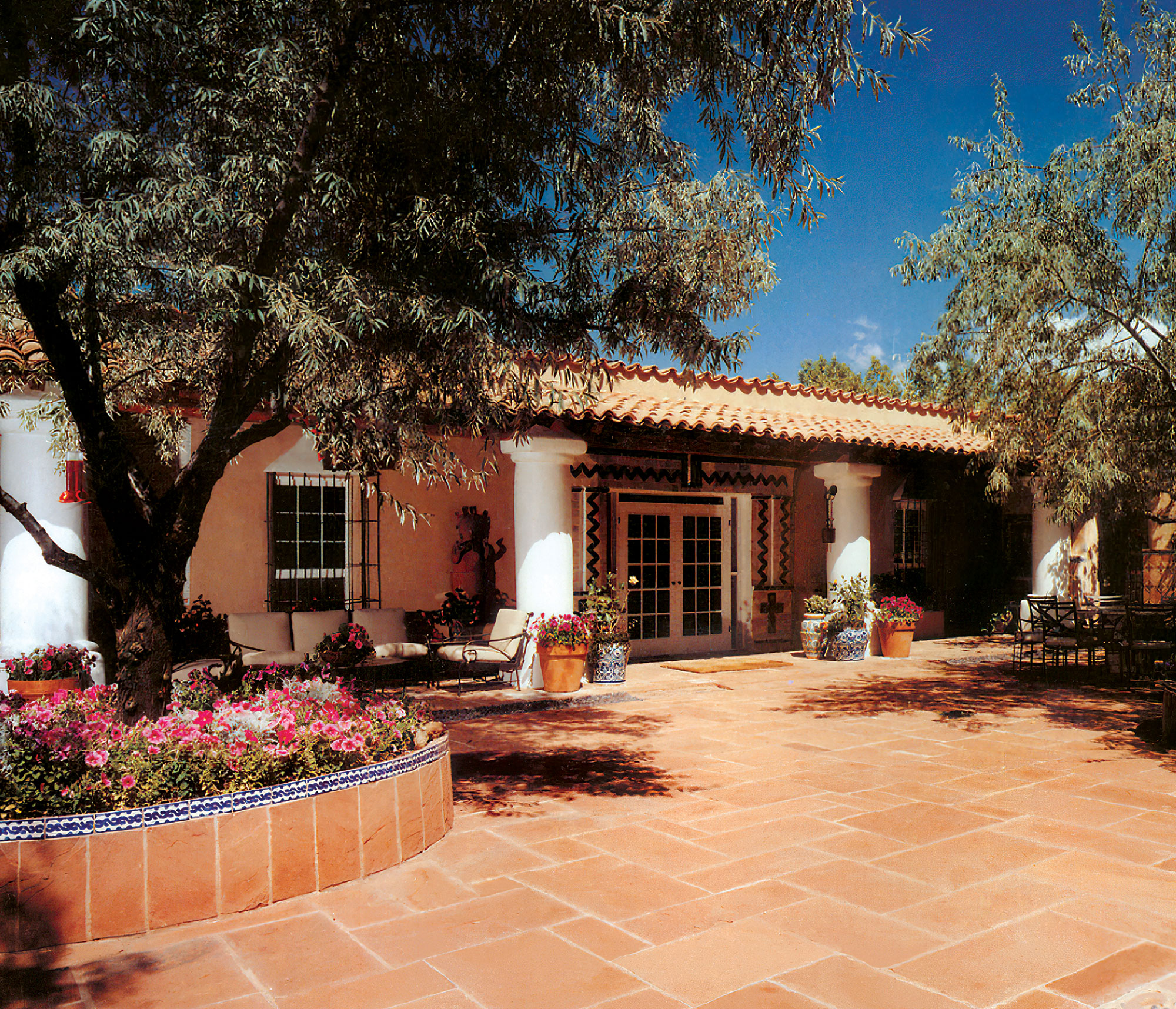
The Historic East Side is the only neighborhood in Santa Fe where you can walk a single block and pass authentic pre-1900 adobe homes, 1920s Pueblo Revival compounds, mid-century Territorial Style homes with their distinctive white brick coping, and documented John Gaw Meem residences within a few hundred feet of each other. Many homes blend styles in ways that reflect their accumulated history: a 19th-century adobe core with Territorial-era additions and Pueblo Revival renovations on top.
For buyers, the architectural mix is both the central appeal and the central evaluation challenge. The same neighborhood that protects character through preservation review also asks buyers to read each property carefully. What is original, what was added later, what is authentic, what is contemporary reproduction. The distinctions affect both value and the practical realities of owning the property.
Streets and texture
East Palace Avenue runs east from the Plaza past the Cathedral and into the residential core; many of the neighborhood’s most significant homes face Palace or sit on its side streets. East Alameda follows the historic course of the Santa Fe River and includes some of the oldest residential properties in the city. Camino del Monte Sol, climbing south from Acequia Madre toward Canyon Road, was the address of choice for the early-twentieth-century artist colony and remains one of the most carefully preserved streets in Santa Fe. Garcia Street and the short blocks south of Alameda are denser, with smaller adobes packed close to each other, while the streets closer to the foothills (Cerro Gordo, Camino Cerrito) open up to larger lots and hillside views.
Daily life on the Historic East Side is meaningfully walkable. The Plaza is five to ten minutes on foot from most addresses, with the Cathedral, the Lensic Performing Arts Center, the museums, and Canyon Road’s gallery district all reachable without a car. Long-running restaurants like Café Pasqual’s, The Shed, and The Compound sit in or immediately adjacent to the neighborhood. For residents they function as part of daily and weekly rhythm rather than as destinations. Acequia Madre Elementary, the public elementary school inside the neighborhood, sits south of Alameda, and Santa Fe Preparatory School sits just to the north.
Who buys on the Historic East Side
Three buyer profiles recur. The first is buyers leaving denser, more expensive cities (coastal California, New York, Boston, Chicago) who want walkable urban living without giving up architectural distinction. The Historic East Side is the only Santa Fe neighborhood that delivers both. The second is established Santa Fe residents who are upgrading or downsizing within the city and want the historic core. The third is second-home buyers, particularly art collectors and people who travel frequently, who value the short-visit walkability and the property’s resilience as an asset.
The buyer pool does not include people primarily focused on lot size, new construction, or low-maintenance lock-and-leave living. Those buyers find better fits in Las Campanas, the Northside, or Eldorado. The Historic East Side rewards buyers who value place, character, and walkability above amenity density and ease of maintenance.
Market dynamics
Inventory on the Historic East Side is consistently thin. In a typical year a handful of properties on the core streets come to market, and a meaningful share of transactions happen quietly, between known buyers and sellers, often without a public listing period. Pricing ranges widely. Smaller restored adobes on side streets can open in the high six figures, while estate compounds with documented provenance and significant acreage routinely transact in the multiple millions.
Resale liquidity is good for character properties that have been carefully maintained and that have a clean preservation history. It is less reliable for properties that have been renovated against the grain of the neighborhood: opened-up floor plans, replaced original windows, removed original details. Buyers and sellers in the Historic East Side market do well to understand the value of what is original.
Webster Estates and the Historic East Side
Webster Estates has handled many of the most significant Historic East Side transactions in recent decades, with active and recently sold properties on East Palace Avenue, East Alameda, Camino del Monte Sol, and the surrounding streets. The full list of available and recently sold Historic East Side properties, including the Canyon Road and Camino del Monte Sol corridors, is on the Historic East Side market archive. Webster Santa Fe’s Historic East Side guide covers the neighborhood’s cultural anchors in detail and is worth reading alongside this one.