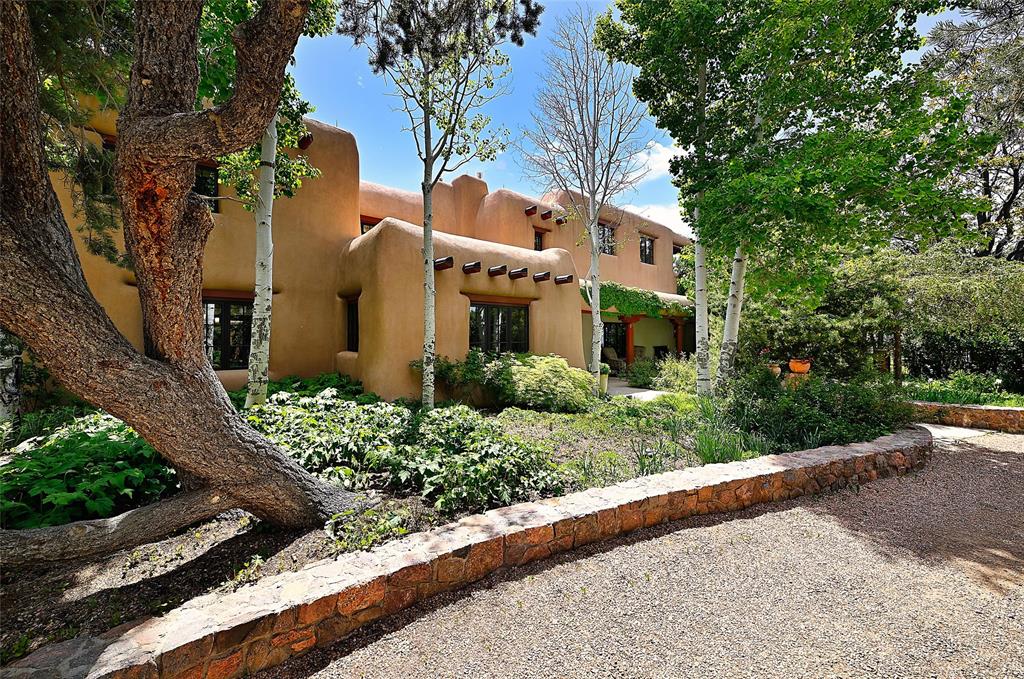
Northern New Mexico Vernacular is the architectural baseline that everything else in this region builds from. It is the unselfconscious adobe building tradition of the ranching and farming families who lived in the area from the Spanish colonial period through the early twentieth century, before the Pueblo Revival and Territorial Style movements codified what would later be marketed as “Santa Fe Style.” For buyers, vernacular properties represent a distinct category: older, more idiosyncratic, often outside the formal historic-district zones, and frequently the most authentic Northern New Mexico architecture available on the market.
What is Northern New Mexico Vernacular architecture?
Northern New Mexico Vernacular is not a single style so much as a building tradition that evolved over three centuries. The basic vocabulary is adobe (sun-dried mud brick, often hand-formed and hand-laid) used to build flat-roofed or pitched-roofed homes organized around the practical needs of family farms, ranches, and small villages. Construction techniques varied by era and locale, and homes were typically built, expanded, and modified across generations rather than designed and completed in a single phase.
What distinguishes vernacular from the later formal styles is the absence of design self-consciousness. A Pueblo Revival home is a designed object that draws on the past; a vernacular home is a building that is the past, built by need, by available materials, and by the accumulated practices of the people who lived in it.
What does a vernacular home look like?
The variation is wide, but common features include:
- Hand-formed adobe walls, often thicker at the base and tapering slightly upward; sometimes single-wythe (one adobe brick wide), sometimes double for taller walls
- Pitched tin roofs over flat structural roofs. The tin shed-roof became common in Northern New Mexico after milled lumber became available in the late nineteenth century, often added over existing flat roofs to manage snow and rain
- L-shaped or U-shaped plans organized around an attached portal (covered porch) or a placita courtyard
- Smaller, irregular window openings, often modified or enlarged over time
- Functional outbuildings: detached kitchens, animal sheds, root cellars, hand-dug acequia irrigation channels still visible on the property
- Locally sourced materials throughout: vigas of regional pine or aspen, latilla ceilings, dirt or brick floors in older sections
Vernacular homes often show the layered history of multiple generations of occupation. A room added in 1880, a kitchen added in 1920, a bathroom added in 1955, electrical service added in 1962, all visible in the construction if you know what to look for.
Where vernacular homes show up in the market
True vernacular properties are concentrated outside the formal historic districts of Santa Fe, in the villages and rural areas of Northern New Mexico where Spanish-colonial settlement patterns persisted longest.
Chimayó, twenty-five miles north of Santa Fe, retains one of the strongest concentrations of vernacular architecture in the region: original Spanish-colonial homes, traditional weaving studios, and working agricultural compounds. Galisteo and the broader Galisteo Basin south of Santa Fe include vernacular ranches and village homes on working land. The villages along the High Road to Taos (Truchas, Cordova, Las Trampas) are similarly rich in vernacular work. Webster Estates has worked with buyers in those villages, and the High Road corridor is part of the team’s working geography. The constraints of buying there (water rights, road access, historic-village protections, the realities of seasonal access) are part of the conversation when the question comes up.
Vernacular elements also survive in less-renovated corners of the Historic East Side of Santa Fe: homes that predate the Pueblo Revival movement and have retained enough original material to qualify as vernacular rather than revival. These are increasingly rare as renovations accumulate. Tesuque and the Pojoaque Valley also include vernacular properties tucked among newer construction.
What buyers should know before evaluating a vernacular home
Vernacular properties usually require significant attention to infrastructure. Foundations, drainage, electrical systems, plumbing, and roof structure all need careful evaluation. The homes were built before modern building codes and have often been repaired piecemeal over decades. A thorough inspection by someone who has worked with historic adobe is essential.
The other consideration is character preservation. The value of a vernacular home rests heavily on what has not been removed or replaced. Original adobe walls, viga ceilings, dirt or brick floors, hand-hewn doors, and unmodified window openings are part of the property’s worth and should survive any renovation. Buyers who plan to make a vernacular home substantially more “modern” (opening up walls, raising ceilings, installing standard double-pane windows) should understand that they are typically reducing rather than enhancing value.
Land matters disproportionately with vernacular properties. Many of these homes sit on working or formerly working agricultural land: orchards, acequia rights, grazing acreage. The combination of historic structure plus working land is often more valuable than either component alone, and understanding the land’s history and water rights is part of evaluating the purchase.
Webster Estates and vernacular properties
Webster Estates has handled vernacular transactions in Chimayó, Tesuque, and the broader Northern New Mexico region, including ranch properties and historic village homes. Evaluating a vernacular home requires a different lens than evaluating a Pueblo Revival or Territorial property. The question is less about provenance and more about what has been preserved versus replaced, and how much working land or water rights come with the structure. If you are considering a vernacular property, the team is happy to walk through the building and the land together.