Old Pecos Trail is the southeast-running corridor that connects downtown Santa Fe to the entrance to the Pecos and Glorieta valleys. The road itself is one of the city’s oldest named arteries, historically the route to the old Pecos Pueblo east of town. The residential streets that branch off it include some of the most architecturally significant homes in Santa Fe.
Where Old Pecos Trail is
Old Pecos Trail runs roughly southeast from where it begins near downtown Santa Fe (at the intersection of Old Santa Fe Trail and Paseo de Peralta) out toward the city limits, where it eventually connects to Old Las Vegas Highway and continues toward the Pecos Wilderness. The residential portion of the corridor covers the stretch from the in-town origin point through the section that passes Museum Hill and the side streets that branch east and west off the main road.
The corridor is geographically distinct from the Historic East Side, which sits east of the Plaza, north of the river, and from Old Pecos Trail proper. Old Pecos Trail occupies the southeast quadrant, close to downtown but quieter, with a residential rather than commercial character along most of its length.
A brief history
The trail dates to the colonial period; it was the established route from Santa Fe to the Pueblo of Pecos and onward to the eastern plains. Residential development along the corridor accelerated in the early twentieth century, particularly between the 1920s and the 1950s, when Santa Fe’s architectural renaissance was in full swing and the corridor offered larger lots than the immediately Plaza-adjacent streets. Many of the city’s most documented twentieth-century homes were built on or just off Old Pecos Trail during this period.
Carlos Vierra, the artist who hand-formed his own adobe home on the corridor in 1918 and who was a major force in the Pueblo Revival movement, built on what is now Old Pecos Trail. John Gaw Meem designed several documented residences in the same area. The corridor’s architectural significance comes from this concentration: a comparatively short stretch of road that includes some of the most important early-twentieth-century homes in the city.
Architecture: a study in early Santa Fe revival
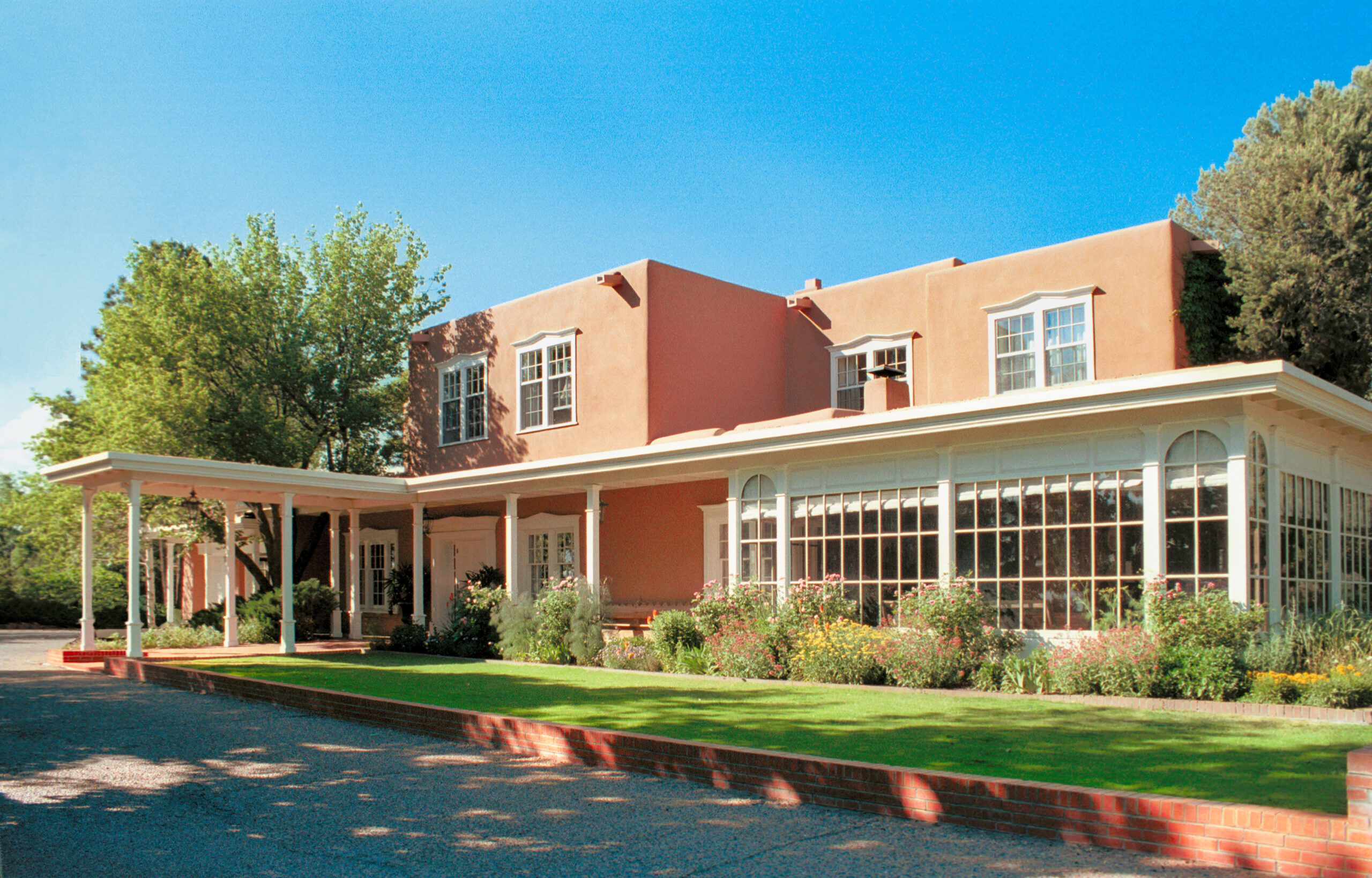
Old Pecos Trail is, in architectural terms, a study in the early phases of Santa Fe’s revival period. The corridor includes the Carlos Vierra House, a hand-built adobe that helped establish what would become Pueblo Revival as a coherent style, alongside multiple documented Meem residences and a range of Pueblo Revival, Spanish Pueblo Revival, and occasional Territorial Revival homes from the 1920s through the 1950s.
Lots tend to be generous by central-Santa-Fe standards. Many properties have mature trees (cottonwoods, elms, fruit trees) that have been on the land for decades. The streetscape feels older and more settled than newer parts of the city, in part because the building stock dates predominantly from the same forty-year window of construction and the trees have had a century to mature.
Daily life
Daily life on Old Pecos Trail is a quieter version of downtown living. The Plaza is a five-to-ten-minute drive, closer than the Northside but not walkable like the Historic East Side. Several restaurants sit along the in-between corridor: Tomasita’s (slightly north on Guadalupe), Sage Bakehouse, and others on Old Santa Fe Trail and Old Pecos Trail itself.
Museum Hill is the corridor’s signature amenity. The Wheelwright Museum of the American Indian, the Museum of International Folk Art, the Museum of Indian Arts and Culture, and the Museum of Spanish Colonial Art are all clustered on Camino Lejo just off Old Pecos Trail. For residents who use the museums as part of their cultural life, and many on the corridor do, the proximity is a real benefit.
Wood Gormley Elementary School and Capshaw Middle School serve the area, both with established reputations in the Santa Fe Public Schools system. The corridor is also close to Atalaya Search and Rescue, Santa Fe Indian School, and the Genoveva Chavez Community Center for residents who need broader civic services.
Who buys on Old Pecos Trail
Historic-home enthusiasts make up the largest single buyer segment. Buyers searching specifically for Meem-era homes, for Pueblo Revival of the early documented period, or for the Carlos Vierra circle of properties find the strongest concentration on Old Pecos Trail. Provenance-focused buyers, those who care about which architect designed a property, when it was built, and what documentation supports the attribution, are well represented.
The corridor also attracts buyers who want a quieter version of the Historic East Side experience: similar architectural quality, similar proximity to downtown, but less foot traffic and more in-between living. For many buyers, Old Pecos Trail is the answer when the Historic East Side feels too dense and the Northside feels too remote.
Market dynamics
Inventory on Old Pecos Trail is thin. The corridor’s significant homes turn over rarely. Many have stayed with the same families for generations, and others change hands only through estate sales. Pricing reflects both the architectural pedigree of the home and the lot quality. Entry-level Old Pecos Trail homes typically open in the mid-seven-figure range; documented Meem residences and homes with substantial provenance can reach considerably higher. The high end of the Old Pecos Trail market is among the highest in Santa Fe.
Webster Estates and Old Pecos Trail
Webster Estates has handled multiple Old Pecos Trail transactions including the Carlos Vierra House and a documented John Gaw Meem estate. The full list of available and recently sold Old Pecos Trail properties is on the Old Pecos Trail market archive. For buyers evaluating the architectural significance of a specific Old Pecos Trail property, the Pueblo Revival and John Gaw Meem guides offer additional context.