Price is a number. Value is what a place holds over a lifetime. Ask what a home is worth and most conversations reach quickly for a figure. It is an understandable habit. A number is portable, comparable, easy to say aloud. But price and value are not the same thing, and anyone who has lived in a house long enough knows the difference in their bones. Price is what a place commands on a given morning. Value is what it holds over years: the feeling it gives and the function it quietly performs, season after season, long after the closing papers have been filed away.
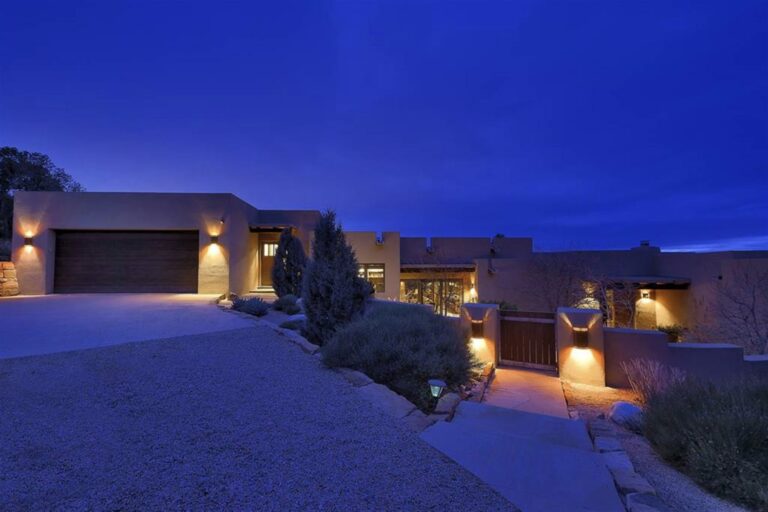
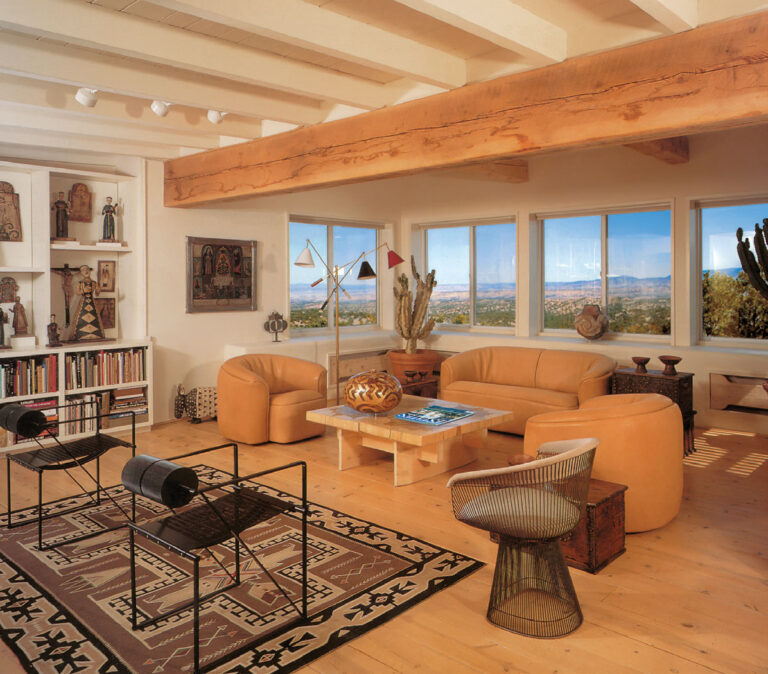
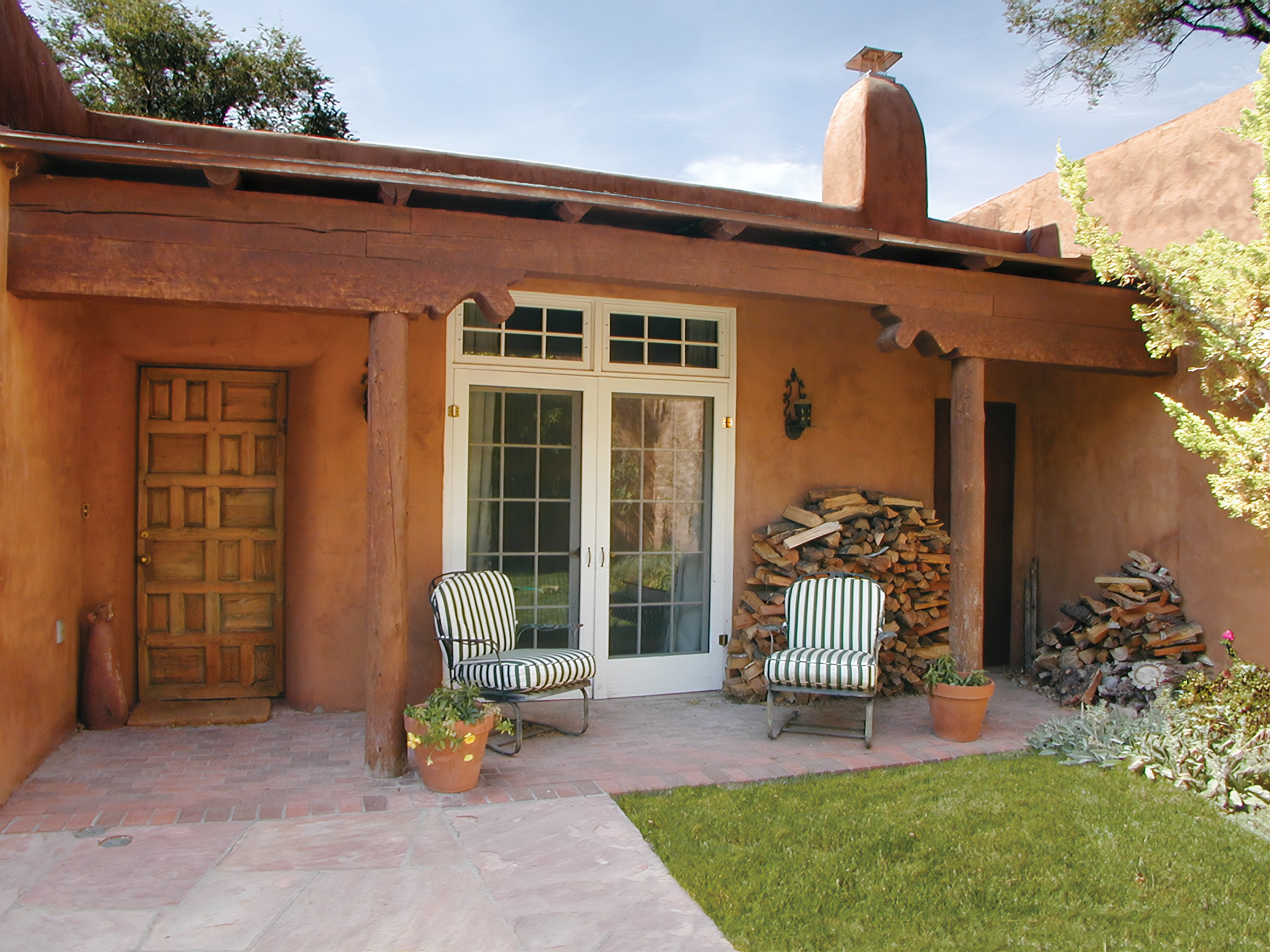
Value begins with architecture, though not in the way listings tend to describe it. Square footage is the least of it. What lasts is proportion, the sense that a room is the size it ought to be. Light, and how a house is oriented to receive it. Materials chosen for how they age rather than how they photograph. Craftsmanship, which is really just care made visible in a wall, a beam, a hand-troweled surface. In Santa Fe these qualities have a particular vocabulary. Adobe that holds the day’s warmth and releases it after dark. Vigas that mark a ceiling the way a good sentence is measured. A courtyard that turns a house inward toward its own quiet. These are not decorations. They are decisions, made well, that keep paying a house back.
Then there is place, which no renovation can manufacture. A home is inseparable from what surrounds it: the neighbors who wave from the acequia path, the way the land falls away toward the mountains, the distance to a good cup of coffee on foot. High-desert light does half the work of any room here, arriving thin and gold in the morning and turning the walls to something close to living color at dusk. You do not buy that. You inherit it by choosing well, and it shapes the ordinary hours more than any single feature ever could.
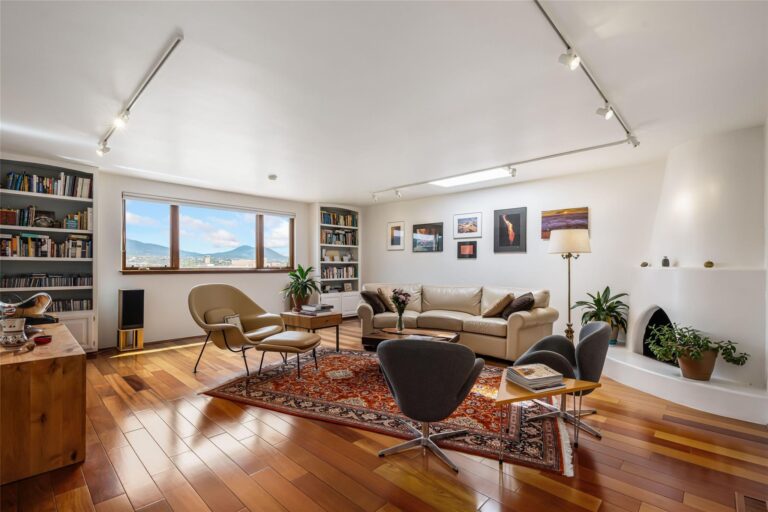
Because in the end a house is measured in ordinary hours. Value lives in the morning light that finds the kitchen while the coffee is made. In a portal deep enough to hold a conversation that runs past sundown. In rooms arranged for how a family actually moves through a day, rather than for how a floor plan imagines they might. A home earns its keep in these unremarkable moments, repeated until they become the texture of a life.
What sustains all of this is stewardship. The best houses are not simply owned; they are kept. Maintained against the weather, adapted as a life changes shape, cared for the way one cares for anything meant to outlast us. This is the quiet argument we return to again and again with the families we work with: a house is a relationship, not merely an asset. Treat it as an asset alone and it will behave like one, appreciating or not according to forces no one controls. Treat it as a relationship and it tends to return the favor.
The reassuring part, and the part too often left unsaid, is that financial value follows. When proportion and light and craft endure, when a house sits rightly on its land and is cared for over decades, the market eventually recognizes what the owner already knew. But that is the consequence, not the point. The best homes do more than appreciate in price. They appreciate in meaning, gathering weight and memory until they become, quietly, irreplaceable.
That is the number worth keeping, though it never appears on any statement.
Continue Exploring
- Santa Fe Architecture Explained: Pueblo, Territorial, and Northern New Mexico Styles. How the region’s building traditions create the proportion, light, and craft that value rests on.
- Santa Fe Neighborhoods: A Guide to Where to Buy and Why. Because place, more than any single feature, shapes the ordinary hours.
- Relocating to Santa Fe: A Guide for Buyers. Practical footing for those choosing well from farther away.
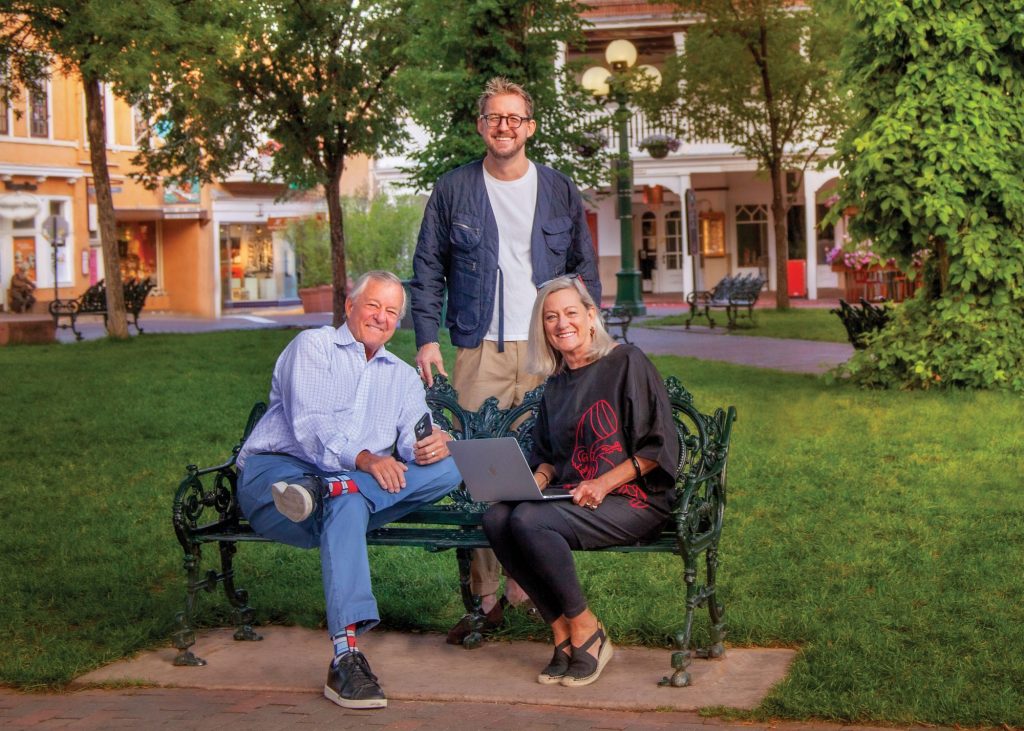
The Webster Estates Team
Chris Webster · Patti Webster · Christopher Webster III · Paisley Mason Webster