Buying a Santa Fe home for a serious art collection is a different exercise from buying for square footage and views alone. The property must work as architecture, as a place to live, and as an environment for objects that may be fragile, oversized, irreplaceable, or central to the owner’s daily life.
In Santa Fe, those questions are amplified by thick adobe walls, deep window openings, intense high-altitude light, fireplaces, irregular historic rooms, and a strong tradition of indoor-outdoor living. A dramatic house is not automatically a good house for art. A quieter house, thoughtfully proportioned and carefully lit, may be exceptional.
Start with the collection, not the house
Before touring property, define what the collection physically requires. Large paintings need uninterrupted wall length and controlled light. Sculpture needs structure, circulation, and safe installation routes. Works on paper, photography, textiles, ceramics, furniture, and archival material each place different demands on a room.
A useful preparation is to record the dimensions and approximate weight of the largest pieces, identify works that are particularly sensitive to light or temperature, and note anything that requires specialty installation. A floor plan shows room size; it rarely tells you whether a work can pass through the front door, turn through a hallway, clear a ceiling beam, or be anchored safely to the wall.
Santa Fe light is both an asset and a risk
Buyers come to Santa Fe for the light, and architects have spent generations finding ways to bring it indoors. For art, however, the quality, direction, and duration of that light matter more than its beauty at a single showing.
Direct western exposure can be punishing late in the day. South-facing glass can create seasonal paths of direct sun that are not obvious during a morning tour. Skylights can make a room feel extraordinary while limiting where sensitive work can be placed. North light is often gentler, but even diffuse high-altitude light deserves careful evaluation.
Look beyond window count. Ask about glazing, exterior shade, interior shades, electrical placement, and whether lighting can be adjusted by zone. Visit important rooms at more than one time of day when possible. Fireplaces, evaporative cooling, dust, and long periods when a second home is unoccupied should also be considered alongside the light plan.
Walls, scale, and circulation
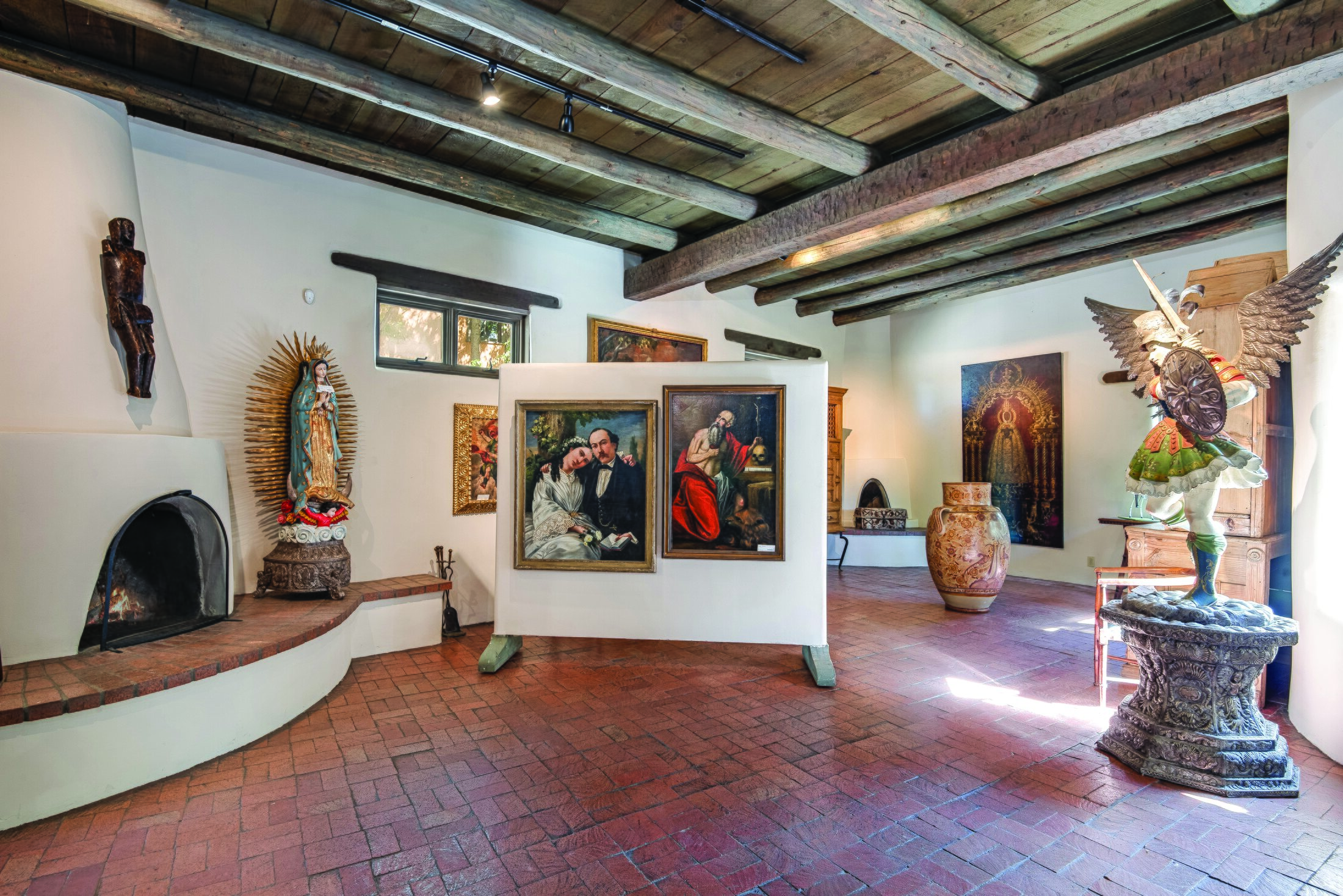
Santa Fe interiors often favor texture over perfect geometry: hand-troweled plaster, rounded corners, nichos, vigas, lintels, and deep reveals. These elements give a house character, but they reduce the amount of neutral hanging surface and can complicate installation.
Determine what the walls are made of before assuming that a substantial work can be hung conventionally. Adobe, framed construction, plaster, stone, and later remodels may exist within the same house. Large sculpture raises different questions: floor loading, base stability, exterior access, crane or lift access, turning radius, and whether a piece can be moved without putting the building—or the work—at risk.
The best art houses are not necessarily the largest. They have legible circulation, strong sightlines, intentional pauses, and enough visual calm that the collection does not have to compete with the architecture.
Matching Santa Fe architecture to the way you collect
Different Santa Fe architectural traditions support different kinds of collections.
- Pueblo Revival and historic adobe often provide intimate rooms, sculptural fireplaces, deep reveals, and surfaces that work beautifully with furniture, ceramics, textiles, and smaller-scale paintings. Original compounds may be less accommodating to monumental contemporary work.
- Contemporary Adobe generally offers more open planning, larger spans, and stronger indoor-outdoor relationships. The trade-off is often more glass, which makes light control and wall planning especially important.
- Territorial Style can offer cleaner wall planes, more regular windows, and a useful balance between historic character and conventional rooms.
- Custom contemporary homes may provide museum-scale walls, integrated lighting, and purpose-built display areas, but buyers should still distinguish thoughtful architecture from expensive finishes and theatrical staging.
Neighborhood is part of the collection plan
In the Historic East Side and around Canyon Road, the appeal is cultural proximity, walkability, and access to some of the city’s most characterful historic compounds. Buyers may accept tighter rooms, limited parking, protected exterior character, or more complicated installation access in exchange for that setting.
The Upper Eastside, Northside, Tesuque, and La Tierra offer more opportunities for privacy, larger sites, studios, guesthouses, and substantial custom architecture. Las Campanas adds gated access, newer construction, and a concentration of larger contemporary interpretations of the Santa Fe vernacular. The Railyard, Baca Street, and Guadalupe districts can appeal to collectors who value contemporary space, proximity to galleries, and a more urban relationship to the city.
The right answer depends on how the collection is actually lived with. A buyer who rotates work, hosts frequently, or maintains a studio has different needs from someone seeking a quiet second home for a small group of deeply personal objects.
A due-diligence checklist for collectors
- Map the collection. Bring dimensions, weights, sensitivities, and a preliminary placement plan for important pieces.
- Track direct sun. Evaluate window orientation, skylights, glazing, shade, and the path of light through the day and across seasons.
- Understand wall construction. Identify appropriate anchoring methods and where reinforcement may be necessary.
- Measure the installation route. Include gates, exterior steps, doors, elevators, hallways, ceiling heights, and turning radii.
- Evaluate structure. Heavy sculpture, libraries, and architectural objects may warrant professional review of floors, bases, and attachment points.
- Review the interior environment. Consider heating and cooling, humidity swings, dust, fireplaces, and how the house performs while unoccupied.
- Plan security and insurance early. Discuss glazing, alarms, privacy, documentation, and insurer requirements before assuming an existing system is sufficient.
- Do not forget storage and work space. Crates, pedestals, packing material, archives, tools, and rotation storage can consume more room than expected.
A qualified art installer, conservator, structural professional, security adviser, or insurance specialist should be involved when the collection or property requires it. The goal during the real-estate search is to identify those questions before an offer becomes a commitment.
Design-minded buying is not the same as buying finishes
Expensive materials can be replaced. Proportion, siting, natural light, craftsmanship, mature landscape, and a coherent relationship between rooms are more difficult to manufacture. In historic property, original details and honest additions often matter more than a newly polished surface. In contemporary property, restraint and resolution matter more than the number of visual effects.
For resale, the most successful homes usually work even after the seller’s furniture and art have left. The architecture should provide a strong framework without depending on one collection to complete it.
The Webster Estates perspective
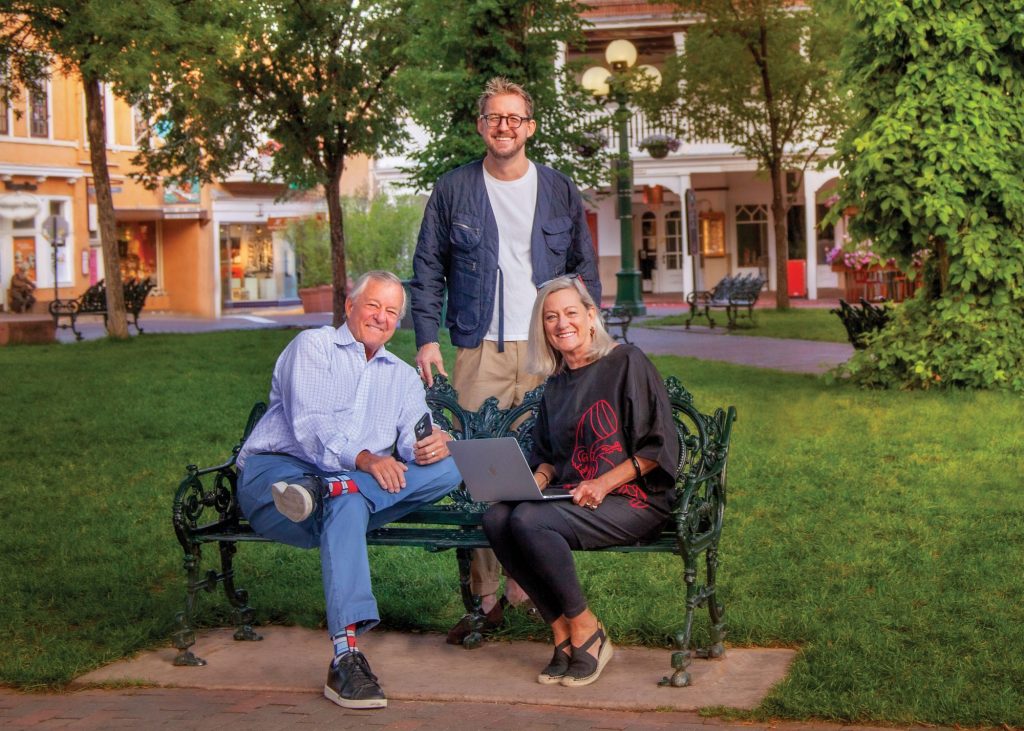
Webster Estates approaches these purchases from the intersection of brokerage, architecture, cultural life, and collecting. Our family has worked in Santa Fe real estate since 1976, while Webster Collection has long worked with fine art, ethnographic art, furniture, jewelry, and objects. Christopher Webster III works across both worlds, helping buyers consider not only what a property is worth, but how it will support the way they intend to live.
If you are looking for a Santa Fe property for an existing collection—or building a collection alongside the purchase—contact Webster Estates for a private consultation. We can help define the requirements, compare neighborhoods and architectural types, and evaluate the current opportunities with the collection in mind from the beginning.