

The First Moderns
A dispatch from the opening of the 48th Whitehawk Antique Indian and Ethnographic Art Show in Santa Fe
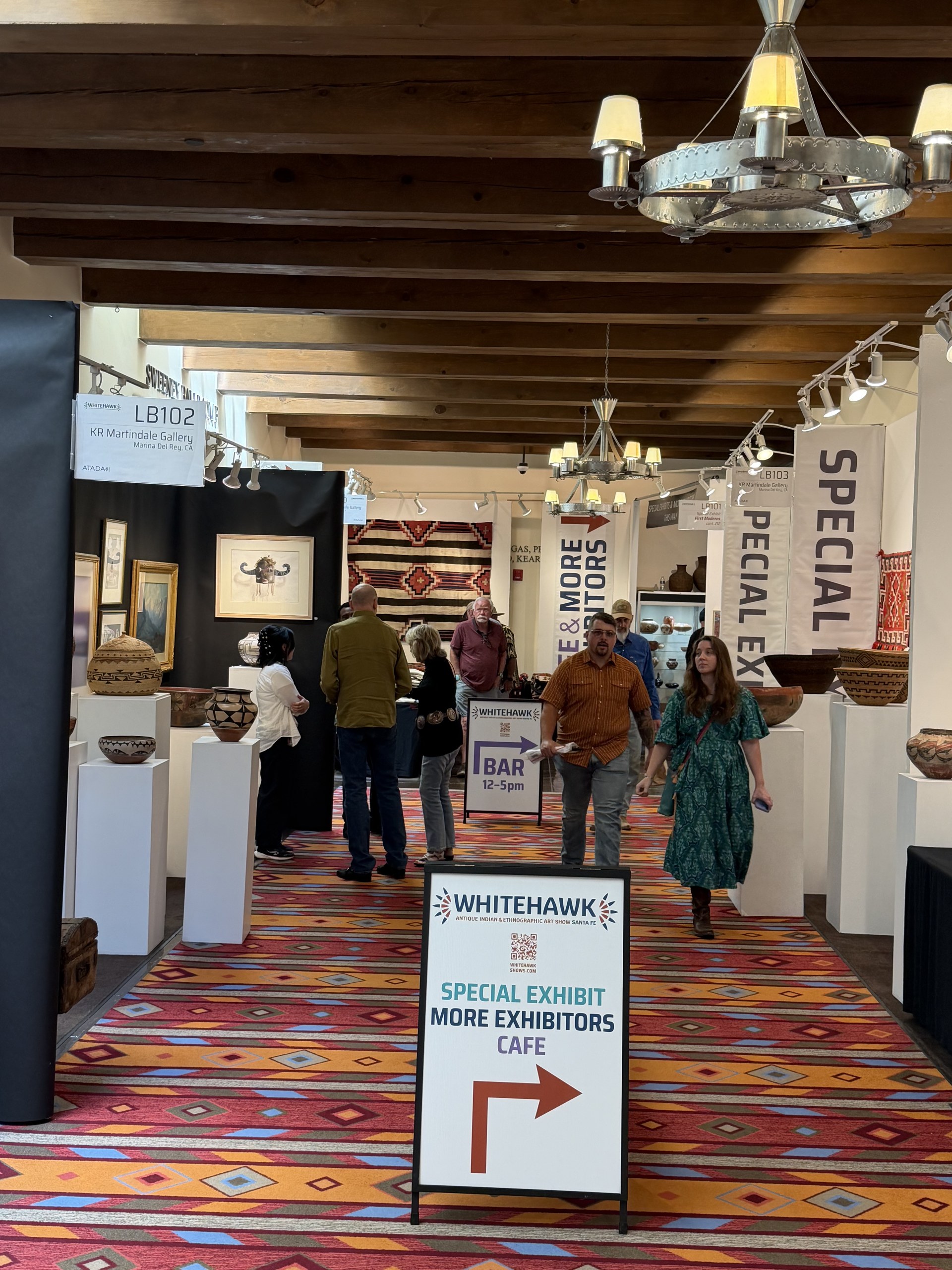
We went down to the Convention Center last night, the way we go most years when the light starts to change and August fills Santa Fe past its edges. The 48th Whitehawk Antique Indian and Ethnographic Art Show opened on Thursday, and we were there for the preview, moving slowly through the aisles with the rest of a crowd that knows how to look before it speaks.
Whitehawk runs August 6 through 9 this year at the Santa Fe Community Convention Center. It is the show that gathers the antique Native American and ethnographic world into one room for a few days, and if you have spent any time in this trade you understand what that room holds: objects that have already outlived several ideas of what they were worth.
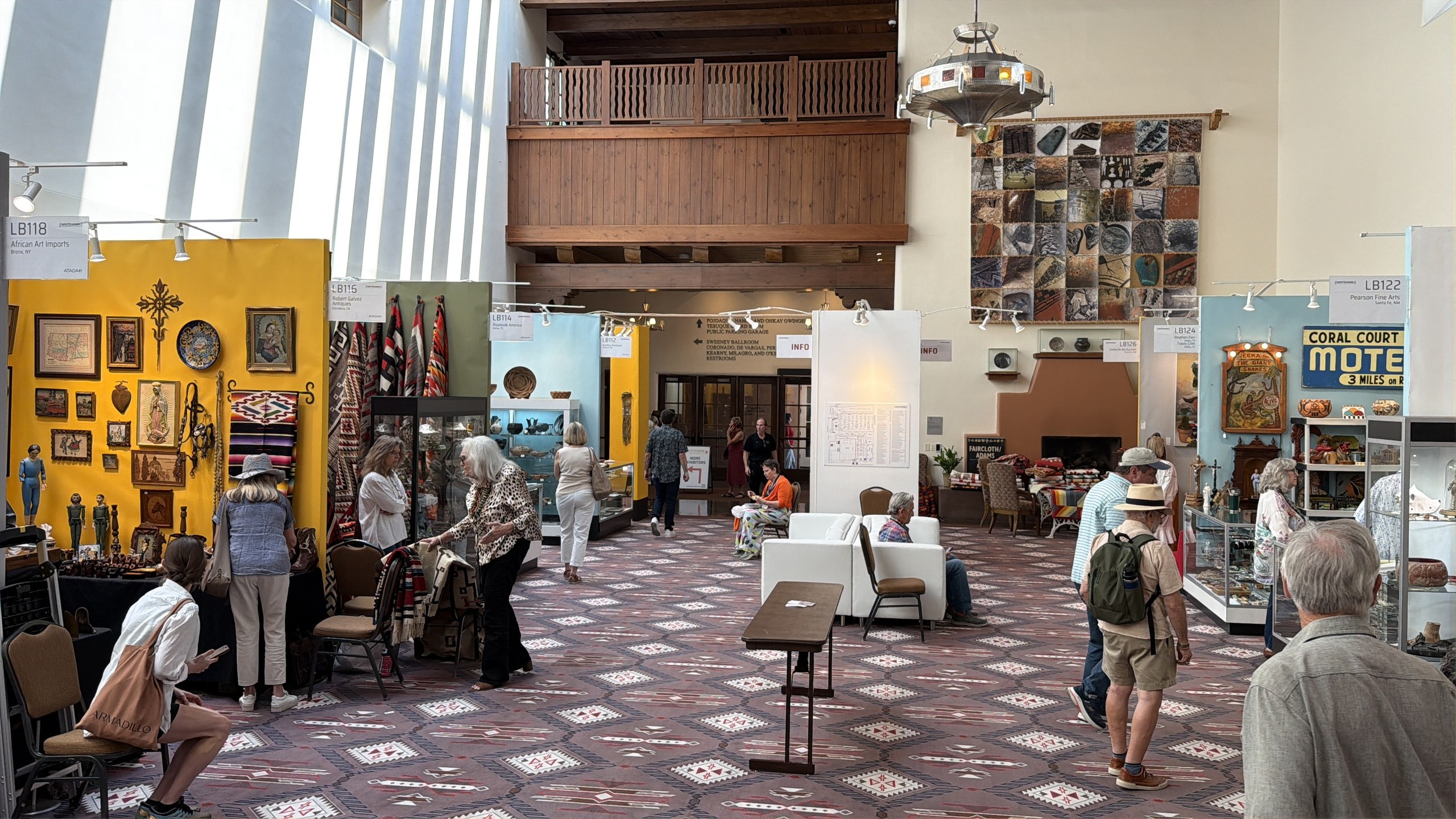
The special exhibits are the reason to arrive early and stay late. The first, called The First Moderns, hangs a wall of Navajo Germantown weavings and makes a quiet, serious argument. That Navajo master weavers, working from the 1880s onward, were running their own experiments in abstraction and color at the very moment Van Gogh and Cézanne were being canonized an ocean away. Stand in front of them and the case makes itself. This is not craft reaching toward art. This is modern art, made here, on its own clock, by hands the standard histories left out.
The second exhibit, Heritage: A Legacy of Tradition, comes from the Hollow Collection and turns the room toward Australia. Aboriginal work carrying more than sixty thousand years of continuous culture, told in ochre on bark and again in acrylic and neon, the Dreamtime rendered in whatever material the century happened to offer. To see it in the same building as the Germantown weavings is to feel two ancient traditions insisting, in different accents, on the same thing: that the new was never the opposite of the old.
This is the conversation the gallery has been having for more than fifty years. Webster Collection began in 1972 with exactly this kind of looking, the belief that an object with real provenance and real intention does not belong to a category so much as to a lineage. A night like last night is a reminder of why we started, and why we stay.
We will be back on the floor before the show closes Sunday. If you are in town, go slowly. The best things there have been waiting a long time; they are in no hurry, and neither should you be.
Christopher and Paisley Webster Santa Fe, August 7, 2026
The particulars
- Show: The 48th annual Whitehawk Antique Indian and Ethnographic Art Show
- Dates: August 6 to 9, 2026, with the benefit preview opening on Thursday, August 6
- Location: Santa Fe Community Convention Center, Santa Fe, New Mexico
- Special exhibit, The First Moderns: A wall of Navajo Germantown weavings, argued as early American modern art made independently of the European avant-garde
- Special exhibit, Heritage: A Legacy of Tradition: Australian Aboriginal art from the Hollow Collection, spanning tens of thousands of years of continuous tradition
Questions people ask
When is the 2026 Whitehawk show, and where? The 48th Whitehawk Antique Indian and Ethnographic Art Show runs August 6 to 9, 2026, at the Santa Fe Community Convention Center. The benefit preview opens Thursday, August 6.
What is “The First Moderns” exhibit about? It is a special exhibit of Navajo Germantown weavings presented as some of the first modern art made in America. The argument is that Navajo master weavers, working from the 1860s onward, were pioneering abstraction and vivid color on their own terms, at the same moment European painters were being canonized as modernists.
What are Germantown weavings? They are Navajo textiles woven with brightly colored commercial yarns milled in and around Germantown, Pennsylvania, and traded onto the Navajo reservation beginning in the late 1860s. Woven largely between the 1860s and about 1900, they are known for their saturated aniline color and the dazzling serrated “eye dazzler” designs.
What is “Heritage: A Legacy of Tradition”? It is a special exhibit drawn from the Hollow Collection of Australian Aboriginal art, presenting work that carries more than sixty thousand years of continuous cultural tradition, from ochre on bark to contemporary acrylic.
Who are the Websters? Webster Collection is a Santa Fe gallery founded in 1972 in the antique Native American and ethnographic art trade. Christopher and Paisley Webster wrote this dispatch after attending the opening in person.
More from The Dispatch
Get in Touch
Let's connect and discuss how we can help you enrich your Santa Fe experience.
