

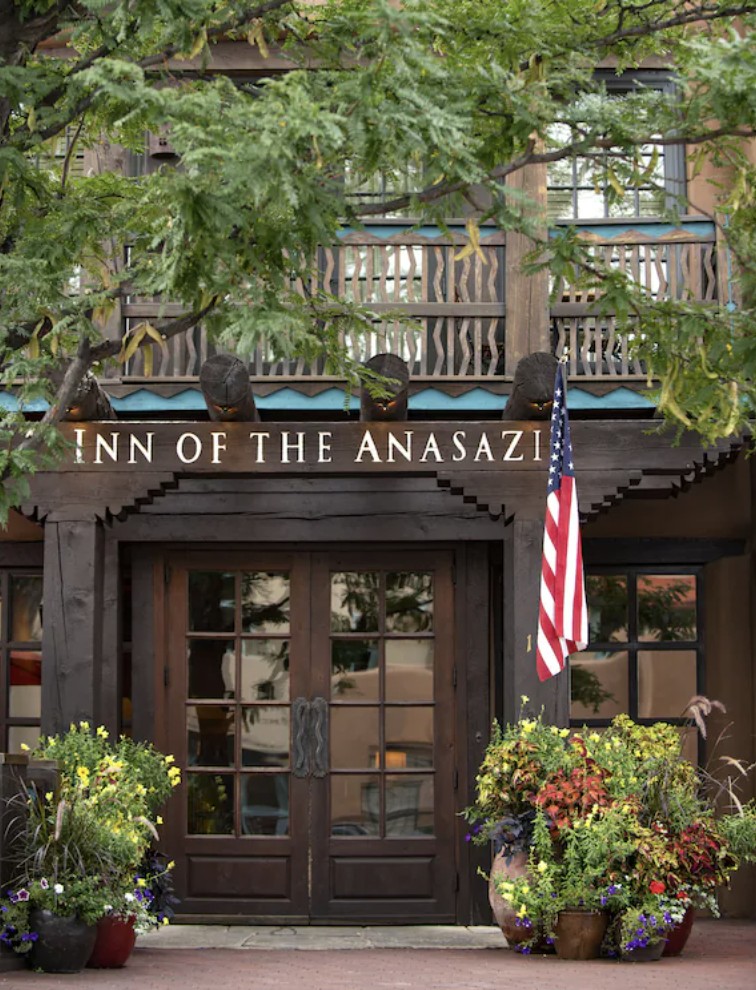
Inn of the Anasazi
One block north of the Plaza there is a hotel that most visitors take for a very old building. It opened in 1991, on the frame of an office block. The distance between what it appears to be and what it is happens to be the most interesting thing about it.
An Office Building on Washington Avenue
The Inn of the Anasazi stands at 113 Washington Avenue, on a site that had held government offices. Bob Zimmer developed it, and Rosewood’s own account of the property says it was built with locally sourced natural materials on the framework of an older downtown building. On September 23, 1990, chosen because it was the autumn equinox, the people building it buried a time capsule of prayers in the foundation. It opened on July 1, 1991 with fifty-eight rooms, and the hotel’s records of that day describe blessings given by a Franciscan priest, a Buddhist monk, and a Hopi spiritual leader. The interiors were the work of Wilson Associates, with Jim Rimelspach as principal designer. The guest rooms were reworked in 2014.
The Work of Looking Effortless
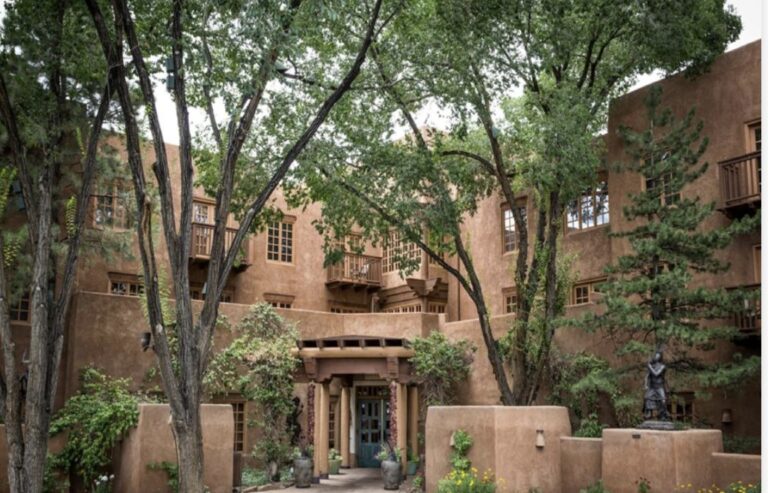
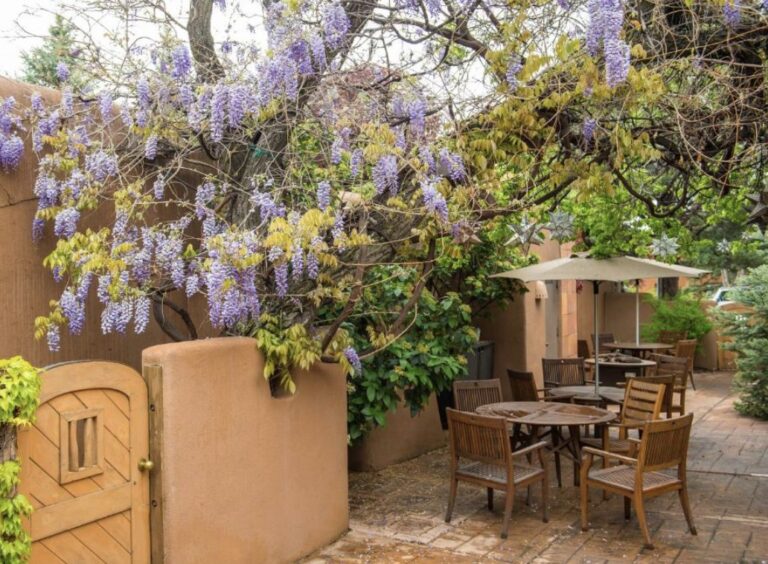
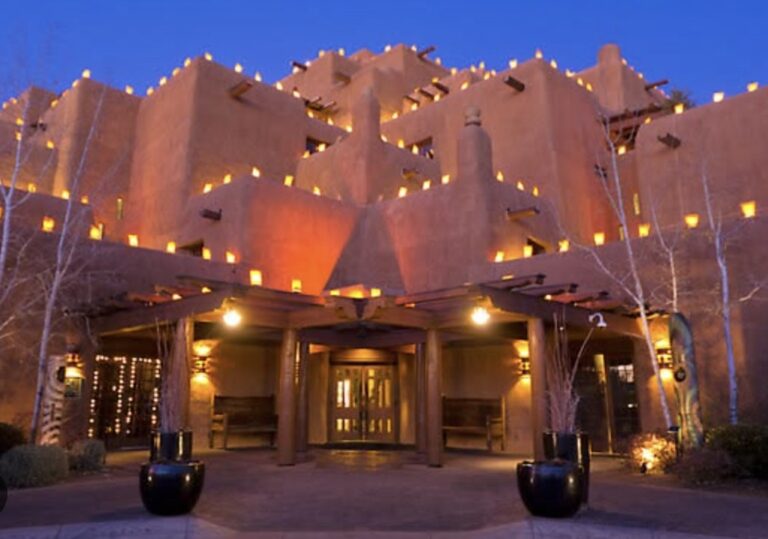
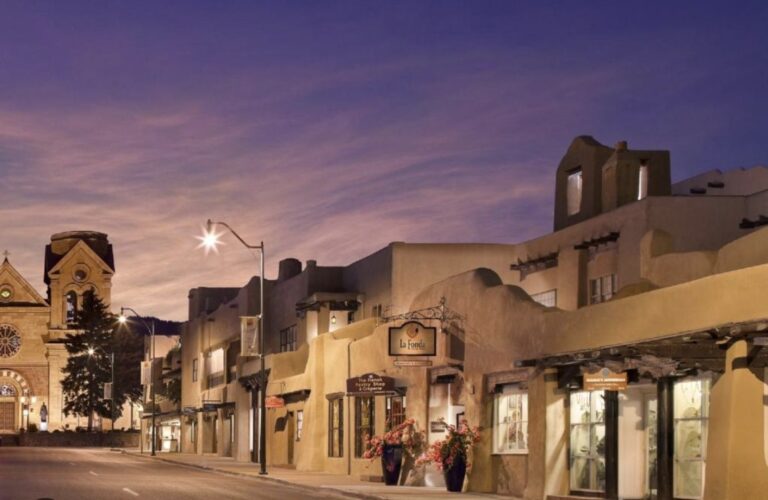
What a visitor meets is hand-carved doors, sandstone, stone underfoot, low ceilings, and a scale that never announces itself. It reads as inevitable. It is not. It is 1990 construction carried out under a 1957 ordinance requiring new downtown buildings to be Spanish-Pueblo or Territorial, which makes this hotel a demonstration of what that rule produces when it is obeyed seriously rather than cheaply. The Inn of the Five Graces, a few streets south, was assembled out of houses that were already standing. This one was made. Neither is dishonest, but only one of them proves that a sense of place here can be produced deliberately, by people who set out to do exactly that, and it is worth knowing which is which before deciding how you feel about either.
The name belongs to the same act. Rosewood glosses Anasazi as Navajo for the ancient ones. The Navajo word is more accurately rendered as something closer to the ancestors of enemies, and the Pueblo people whose ancestors these were prefer Ancestral Puebloan, a position the Indian Pueblo Cultural Center states plainly and the term a visitor will meet at the Museum of Indian Arts and Culture. That shift was under way in the early 1990s, in the same years this hotel opened under the older word and kept it, which is a fact about 1991 rather than a verdict on it.
Fifty-Eight Rooms
Rosewood operates the hotel and continued to do so after Brian Friedman bought it in 2019. The restaurant and bar off the lobby were redesigned in 2015, and the chef Michael Schlow was brought in from 2019 to work on the food. The hotel’s Sense of Place programme, which Rosewood’s own materials describe as curated, includes gallery visits arranged by a member of staff whose title is art concierge. In a city where the galleries are a substantial part of the point, that is more useful than it sounds. Canyon Road is a walk from the door and Sazón is closer still.
One Block
The address is the argument. Washington Avenue at the Plaza is as central as Santa Fe gets, and the hotel is small enough that being central does not cost it quiet. La Fonda is two minutes away on the far corner of the square and does the opposite thing on purpose, moving a continuous crowd through its ground floor all day. El Rey Court is two miles out and does a third thing.
Of the properties in this section, this is the one that answers the least comfortable question: whether a place can be built rather than inherited. The Inn of the Anasazi is thirty-five years old, was an office building before that, and feels older than either fact allows. That is craft, and craft is the only honest way to do it.
Common Questions
When was the Inn of the Anasazi built?
It opened on July 1, 1991, developed by Bob Zimmer on the frame of an existing downtown building that had held government offices. It has fifty-eight rooms and stands at 113 Washington Avenue.
Is Anasazi the correct term?
The hotel carries a Navajo-derived name for the ancient inhabitants of the region. Pueblo communities generally prefer Ancestral Puebloan, and the National Park Service adopted that usage during the 1990s.
Get in Touch
Let's connect and discuss how we can help you enrich your Santa Fe experience.
