

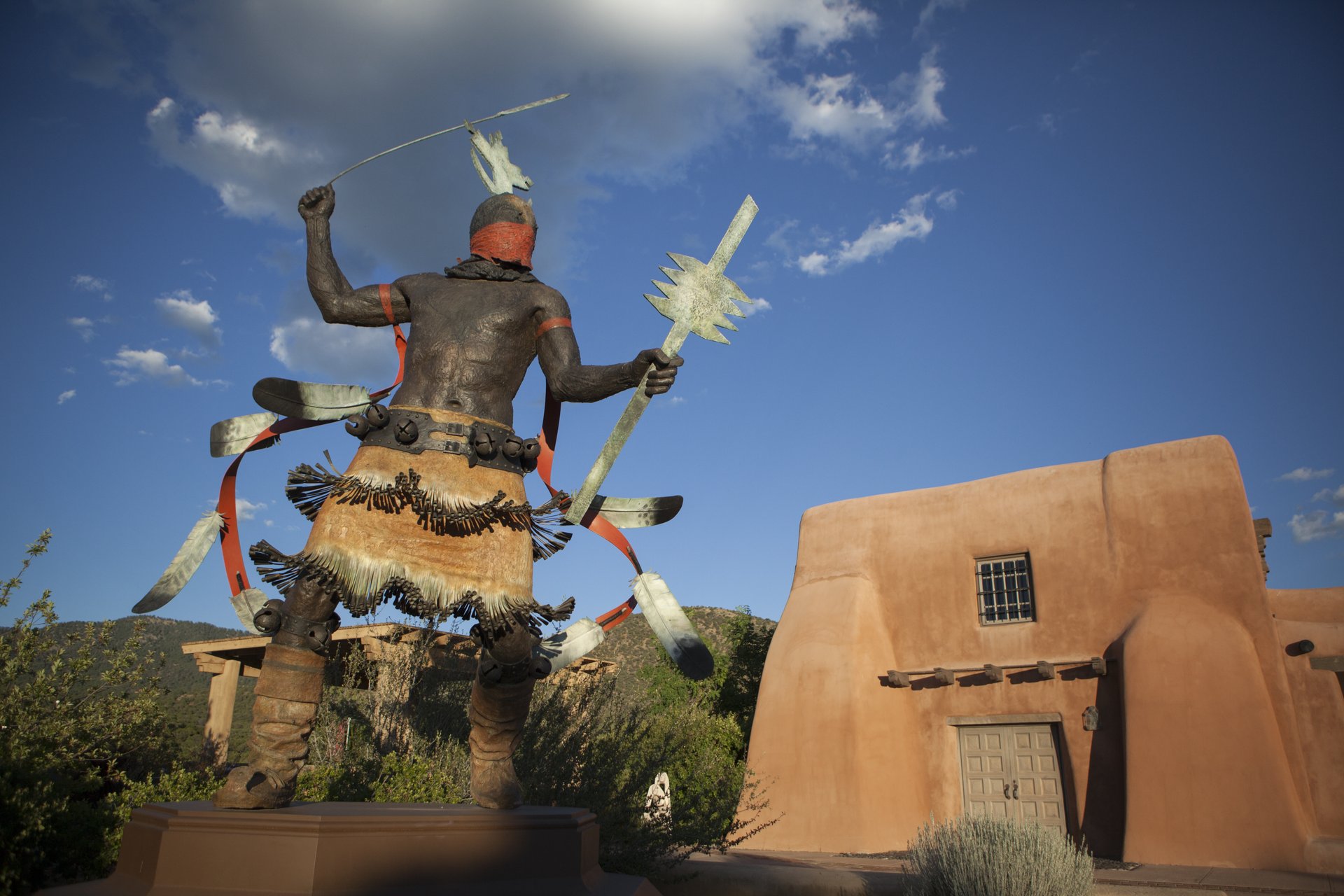
The Museum of Indian Arts and Culture
The Museum of Indian Arts and Culture is the public face of the Laboratory of Anthropology, which is the state of New Mexico’s research collection of Southwestern Native art and material culture. It stands at 710 Camino Lejo on Museum Hill. It is one of four state museums in the Museum of New Mexico system, along with the New Mexico Museum of Art, the New Mexico History Museum, and the Museum of International Folk Art.
A Collection First, a Museum Afterward
The Laboratory of Anthropology was founded in 1927 with money from John D. Rockefeller Jr., as a research institution rather than an exhibiting one, and from 1931 it occupied a building by John Gaw Meem in the Pueblo Revival manner he did more than anyone to establish as the Santa Fe idiom. It merged with the Museum of New Mexico in 1947. The collection kept growing regardless: more than seventy thousand catalogued archaeological, ethnographic, and fine art objects, and, because the Laboratory is the state repository for material excavated on state land, several million further artifacts held in bulk from thousands of sites.
For sixty years there was almost nowhere to show any of it. The exhibition building opened in 1987, next door to the Laboratory, at roughly thirty-one thousand square feet. That sequence explains the museum. The collection came first and the galleries were built afterward to serve it, which is the reverse of how most museums are assembled, and it is why the holdings run so much deeper than the wall space.
Here, Now and Always
The core exhibition occupies the 8,400 square foot Amy Rose Bloch Wing. It first opened in August 1997, was closed in 2019, taken apart, and rebuilt from the ground up, and reopened in July 2022. Here, Now and Always was curated with more than sixty Native advisers, and the result shows it in the grammar. The labels are largely first person. The organizing principle is community rather than chronology or material type, and the voices are attributed by name rather than pooled into a single anonymous one.
The nineteen Pueblos of New Mexico are represented, along with Apache, Ysleta del Sur Pueblo, Hopi, Diné, Paiute, and O’odham communities. More than six hundred objects are on view, across ceramics, basketry, jewelry, textiles, painting, and contemporary fashion. The argument running through all of it is plain, and it is one a great many collections of this kind still manage to avoid: these are living communities with a present tense, not cultures to be reported in the past.
What the State Holds, and What It Returns
Being the state repository is not a neutral fact and the museum does not treat it as one. Under the Native American Graves Protection and Repatriation Act of 1990, MIAC has to inventory what it holds, consult with tribes and Pueblos, and return human remains, funerary objects, sacred objects, and objects of cultural patrimony. Given the size of the archaeological repository, that is a generational undertaking, and it is still under way: notices of inventory completion are still being filed.
Santa Fe was early to this work rather than resistant to it. After the act passed, Museum of New Mexico director Tom Livesay commissioned one of the first cultural sensitivity policies of its kind, and MIAC’s chief curator, Bruce Bernstein, established what is thought to have been among the first dedicated vaults for sacred and religious items that communities preferred to leave in the museum’s care but away from public view. Amendments passed in 2024 tightened the obligations and set a 2029 deadline for the return of human remains. Nothing about the question of who holds what is settled, and the galleries upstairs are better read with that in mind.
Getting There
Museum Hill sits southeast of downtown off Old Santa Fe Trail, about ten minutes by car and a long uphill walk otherwise. Three other museums share the same short road: the Museum of International Folk Art, the Museum of Spanish Colonial Art, and the Wheelwright Museum of the American Indian. Only the folk art museum is a state institution; the other two are private. They are close enough to walk between, and the shared plaza has one of the better long views west across the city.
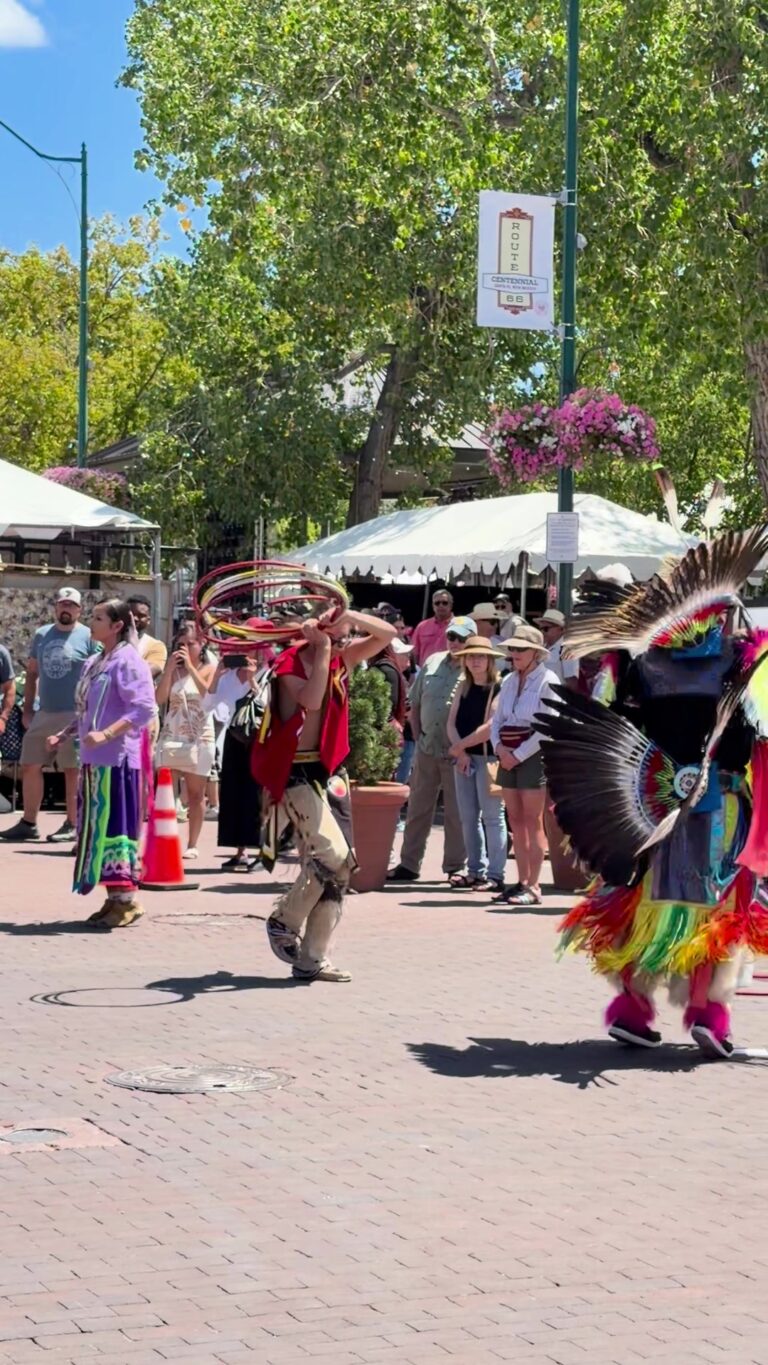
For current work by the same communities, Santa Fe Indian Market fills the Plaza each August. Do MIAC first if you can. An hour here beforehand makes the booths legible in a way they are not otherwise, and Indian Market is the hinge of the Santa Fe year if you are still choosing a month.
Common Questions
What is the Museum of Indian Arts and Culture?
A state museum on Museum Hill in Santa Fe, and the public exhibition wing of the Laboratory of Anthropology, which holds New Mexico’s research collection of Southwestern Native art and material culture. Its core exhibition is Here, Now and Always.
What is Here, Now and Always?
The museum’s core exhibition, first opened in 1997, rebuilt with more than sixty Native advisers, and reopened in July 2022. More than six hundred objects are on view, organized by community rather than by chronology, with first-person labels attributed by name.


Get in Touch
Let's connect and discuss how we can help you enrich your Santa Fe experience.
