


Tomasita’s
The railroad that ran north out of Santa Fe was named after chile. The Denver and Rio Grande laid a narrow-gauge branch down from Antonito, Colorado, a hundred and twenty-five miles of three-foot track following the Rio Grande, and because so much of the freight moving on it was the chile crop, almost nobody used its official name. They called it the Chile Line. On the first of September, 1941, the last train pulled out of the Guadalupe Street station, and the rails were lifted the following year. The brick depot at the south end of the Railyard is still standing, and what goes on inside it now is the eating of chile. That is a coincidence. It is also a very good one.
How Tomasita’s Got Into a Train Station
Georgia Maryol did not set out to run a New Mexican restaurant. In 1974 she bought a small cafe on Hickox Street that a cook named Tomasita Leyba was running, after an accident left its owner unable to carry the debts on it, and she kept both the name and the cook. Leyba’s recipes, and those of her sister-in-law LaLa Tapia, are what the kitchen was built on. The restaurant is named for the woman who cooked rather than for the woman who bought it, which is not the usual arrangement. Maryol’s brother Jim opened Tia Sophia’s downtown the following year, so two of the addresses Santa Feans argue hardest about were started twelve months apart by the same family. In 1979 Maryol bought the Denver and Rio Grande depot and moved the restaurant into it. The Railyard then was track, warehouses, and very little else, and the city would not get around to remaking it for another quarter century. She ran the place until 2001, her cousin Ignatios Patsalis for the decade after that, and her son George Gundrey has owned it since 2011.
The Chile
Northern New Mexican cooking, which in practice means the chile is the argument and the rest of the plate is there to carry it. Carne adovada, pork held in red chile until it gives up. Chile rellenos. Tamales. Enchiladas under red or green, or under both at once, which in this state has a name and a Santa Fe origin story attached to it. Sopaipillas arrive with honey. The house says it goes through more than eighty thousand pounds of chile in a year and that all of it is grown in New Mexico, which is a first-party number and the same kind of sourcing claim The Shed makes about its contract in Hatch.
What Kind of Place It Is
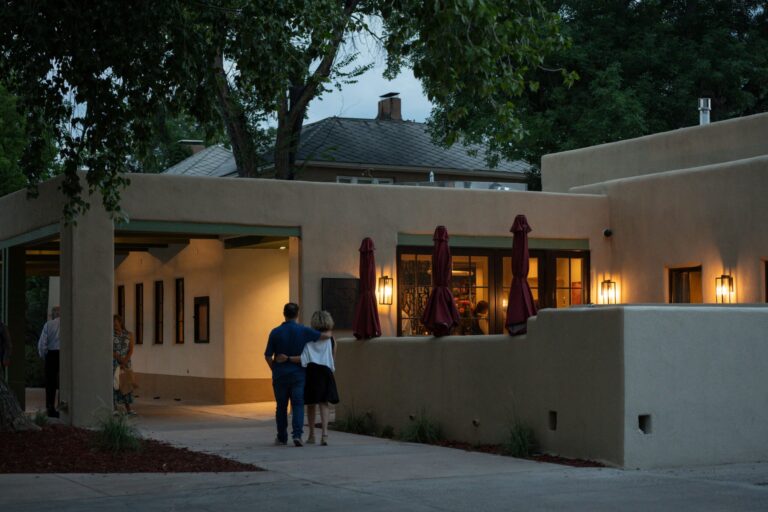
It is not near the Plaza, and anyone who tells you it is a few steps away has not walked it. Tomasita’s sits at the far south end of the Railyard, past the farmers market and the rail platform, with a parking lot, which in this part of town is its own form of hospitality. Inside, the depot’s proportions are still doing their work: one long, high, hard-surfaced dining space that fills and gets loud, and the loudness is most of the atmosphere. There is a bar, and the house is more attached to its margaritas than to almost anything else it serves. There is a second Tomasita’s in Albuquerque, but this is the one with a railroad in it.
For the same regional food on a smaller scale, La Choza is a few minutes west across the tracks, and The Shed, off the Plaza, is where most red chile arguments in this city get measured from. Cafe Pasqual’s cooks the other downtown idea of breakfast. If you are in the Railyard anyway, SITE Santa Fe is a few minutes up the district and is why a good many people are down here to begin with. And the month to eat this food is the one the harvest arrives in; The Santa Fe Year covers the calendar.
Common Questions
What was the Tomasita’s building before it was a restaurant?
A railroad station. The Denver and Rio Grande’s narrow-gauge branch ended here, and the brick depot on South Guadalupe was its Santa Fe terminus until the line was abandoned in 1941.
Why was that railroad called the Chile Line?
Because of what it hauled. The branch ran a hundred and twenty-five miles down from Antonito, Colorado, and the chile crop made up so much of its freight that the nickname displaced the railroad’s actual name for it.
Discover More


Get in Touch
Let's connect and discuss how we can help you enrich your Santa Fe experience.
