


Santa Fe Opera
Some performances begin with the drive. Seven miles north of the Plaza on US 84/285 the city falls away, the land opens past Tesuque, and by the time the mesa comes into view the evening has already started.
The Santa Fe Opera has stood on that mesa since 1957, when John Crosby opened his first season with Puccini’s Madama Butterfly in a small open-air theater built on a former guest ranch. He had taken the property the previous autumn on a three-year lease, with two hundred thousand dollars from his parents. He stayed forty-three years, the longest general directorship in American opera, and died in 2002.
Crosby’s Two Bets
Neither proposition was obvious in 1957. The first was that American singers deserved enough rehearsal time to grow into difficult roles. The second was that an audience would travel a long way for unfamiliar work.
He backed the first by starting an apprentice program in that opening season, with eight singers. A program for theater technicians followed in 1965. More than fifteen hundred singers have come through it since, and roughly forty are taken each summer, which is why so many voices you hear elsewhere in the world turn out to have spent a July on this mesa.
He backed the second with the repertory, and the record is the argument: some two thousand performances of a hundred and eighty operas by ninety composers, among them nineteen world premieres and forty-five American premieres. The appetite has not gone anywhere. The 2026 season gave Tobias Picker’s Lili Elbe its American premiere alongside Madama Butterfly and The Magic Flute.
The House That Lets the Weather In
The house you sit in is the third on the site. The first burned on July 27, 1967, four weeks into that season, and the company finished the summer in a high school gymnasium while Stravinsky lent his name to the rebuilding fund. The second opened in June 1968 and served until 1997. The current theater, named for Crosby, was designed by the New York firm headed by James Polshek and built in ten months between two seasons to open in July 1998. It seats 2,128, with standing room for about a hundred more.
What the architecture achieves is subtraction. There is no proscenium and no fly tower, and no wall of masonry between the audience and the country the building sits in. The roof floats, the sides stay open, and the back of the stage can be opened to the west, so a sunset over the Jemez does not compete with the performance but enters it. A storm may cross the valley during the second act. Wind moves through the seats and rain sounds on the roof. No two evenings are alike, and the design was built to let that happen rather than to survive it.
Tailgates, Black Tie, and Denim
The audience belongs to the collaboration as well. People arrive early, open tailgates, set out dinner, and watch the light go long over the valley before they ever take their seats. You will hear several languages in the parking lot. You will see black tie beside denim and nobody troubled by either.
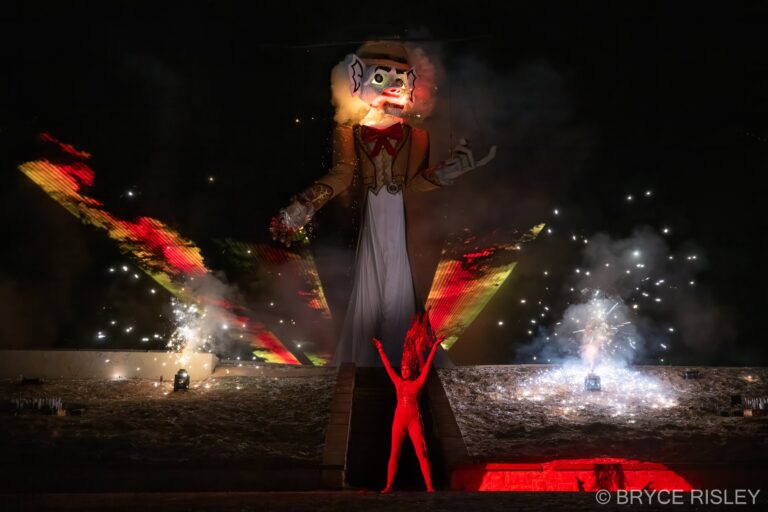
When people ask us what to do first in a Santa Fe summer, this is what we tell them: go to the opera, and go early enough to eat outside beforehand. The rest of the city makes more sense afterward. It helps to know that the season is the whole of the company’s year. The mesa is dark from September until June, and the winter concert life moves indoors to the Lensic and rooms like it. The opera opens the loudest stretch of the Santa Fe year, and Zozobra closes it on the Friday before Labor Day.
If You Go
Season. Summer only. Late June or early July into late August, with five operas in rotating repertory and nothing on the mesa the rest of the year. Build the trip around the season rather than the other way round.
Getting there. The Crosby Theatre is at 301 Opera Drive, seven miles north of the Plaza on US 84/285. Traffic backs up at the turn, so plan to be parked well before curtain.
Dinner first. Tesuque Village Market is on the way out of town. Geronimo on Canyon Road works if you are starting from downtown. Or bring a tailgate and eat in the parking lot, which is the local answer.
What to bring. The theater is open at the sides and the mesa sits above seven thousand feet. Nights turn cold after sunset, even in July. Layers, a blanket, and something waterproof.
Following the words. Every seat and standing place has its own screen carrying the libretto in English or Spanish, so no homework is required.
Common Questions
When is the Santa Fe Opera season?
Summer only. Roughly late June or early July into late August, with five operas in rotating repertory and no performances on the mesa the rest of the year.
Is the Santa Fe Opera outdoors?
Partly. The Crosby Theatre is roofed but open at the sides, and the back of the stage opens west toward the Jemez. Performances go on in weather, and the mesa sits above seven thousand feet, so nights turn cold after sunset even in July.


Get in Touch
Let's connect and discuss how we can help you enrich your Santa Fe experience.
