

Santa Fe Indian Market
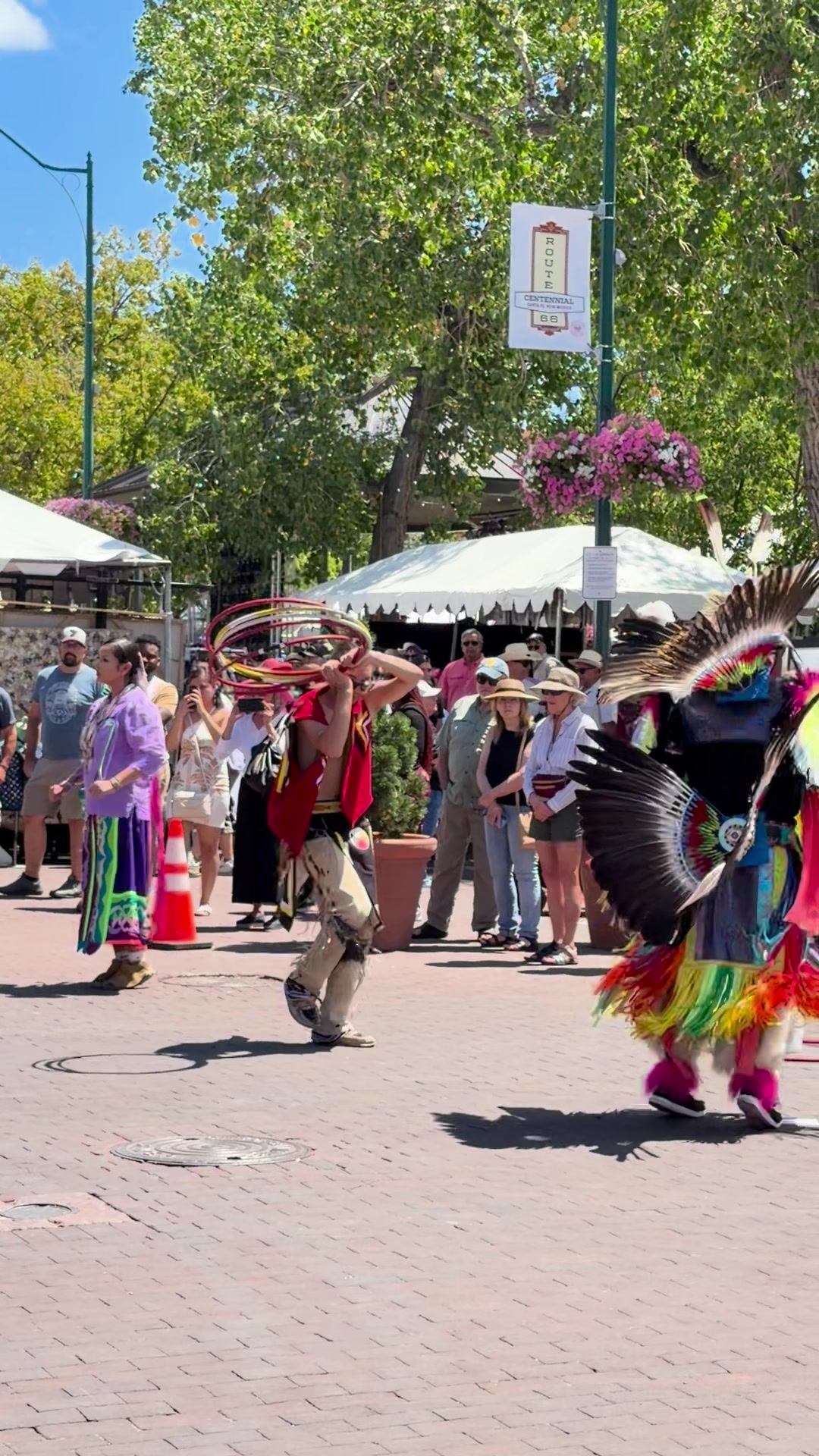
Santa Fe Indian Market is made by artists. Nearly a thousand of them, from more than two hundred Tribal Nations by SWAIA’s count, juried in ten classifications, selling their own work from their own booths on and around the Santa Fe Plaza across two days in August. It is the largest market of its kind anywhere, and the reason to go is the person standing behind the table.
What 1922 Was
The market began in 1922 as the Southwest Indian Art Fair and Industrial Arts and Crafts Exposition, organized by Edgar Lee Hewett and Kenneth Chapman of the Museum of New Mexico, whose art museum on the Plaza Hewett had opened five years before. It is worth being accurate about what that first fair was. It was held indoors, admission was charged, work came from traders as well as from artists, and non-Native judges decided what was good, set the prices, and handled the sales. Native artists did not deal with buyers.
The same year, and for a related reason, the New Mexico Association on Indian Affairs formed to fight the Bursum Bill, which would have transferred Pueblo land titles to non-Native claimants. The association took over sponsorship of the fair in 1934. It became the Southwestern Association on Indian Affairs in 1959, and the Southwestern Association for Indian Arts, SWAIA, in 1993, which is who produces the market now.
1931
In 1931 the market moved outdoors, under the portal of the Palace of the Governors, and artists were expected to make their own sales rather than wait on a committee. That is the year the thing became theirs, and every good hour anyone has had at Indian Market since descends from it. The portal is still where Native vendors sell, which means the 1931 arrangement did not end when the weekend did.
The Weekend Itself
Judging happens on the Thursday. In 2026 more than 150 judges and volunteers, Native art experts, academics, and peer artists among them, worked through ten classifications: jewelry, pottery, painting and graphics, Pueblo wood carving, sculpture, textiles, basketry, beadwork and quillwork, diverse arts, and a youth division for artists seventeen and under. Best of Show is announced Friday morning. The market runs Saturday and Sunday, and SWAIA’s Native fashion show closes it on Sunday afternoon.
The classifications flatten what the booths do not. Pottery from the Pueblo nations, weaving and silverwork from the Diné, and basketry from the Apache stand alongside work from nations with no Southwestern connection at all. Artists must be enrolled in a federally recognized tribe, band, or affiliation, with documentation, and the work must be at least seventy percent made by hand.
The 104th market gave Best of Show to Sergio Lugo of Santa Clara Pueblo for Floating Melon Bowl: coil-built from hand-dug clay, fired outdoors, burnished with mica slip, stone-polished, four-sided, with a kiva step lid. He said it was his fourth attempt and that he had nearly abandoned it. That is the scale the weekend actually operates at, whatever the attendance figure says.
Going
The market falls on the third weekend of August. The 104th was held on August 15 and 16, 2026; the 105th falls on August 21 and 22, 2027. SWAIA puts attendance above a hundred thousand, and the city behaves accordingly. Book far ahead, walk, and do not plan on parking near the Plaza. Restaurants downtown fill weeks out, Café Pasqual’s among the first of them.
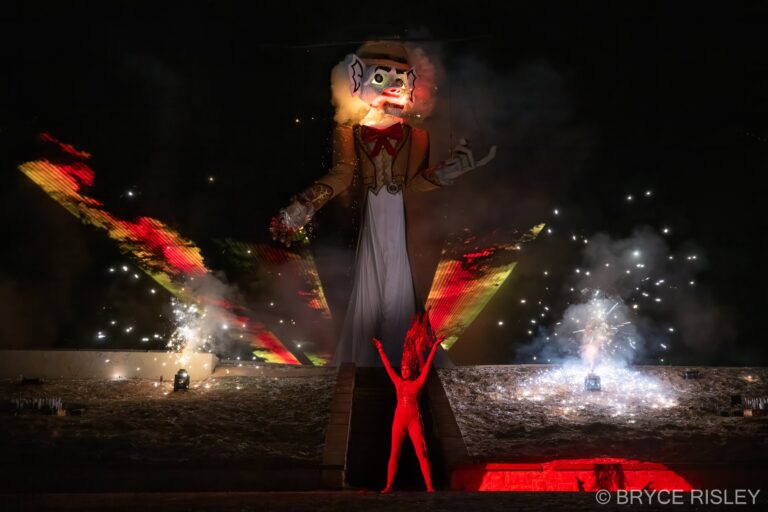
Come with a plan for what you want to look at, and then be willing to lose it. What people carry home is usually not the piece they arrived intending to buy but the twenty minutes that preceded buying something else. For context on either side of the weekend, the Museum of Indian Arts and Culture, the Wheelwright Museum of the American Indian, and the Museum of International Folk Art are all on Museum Hill. Indian Market also opens the stretch of the Santa Fe year that ends with Zozobra on the Friday before Labor Day.
Common Questions
When is Santa Fe Indian Market?
The third weekend of August, on and around the Santa Fe Plaza. The 104th was held on August 15 and 16, 2026. The 105th falls on August 21 and 22, 2027.
Who can exhibit at Indian Market?
Native artists enrolled in a federally recognized tribe, band, or affiliation, with documentation, whose work is at least seventy percent made by hand, and who are juried in by SWAIA.


Get in Touch
Let's connect and discuss how we can help you enrich your Santa Fe experience.
