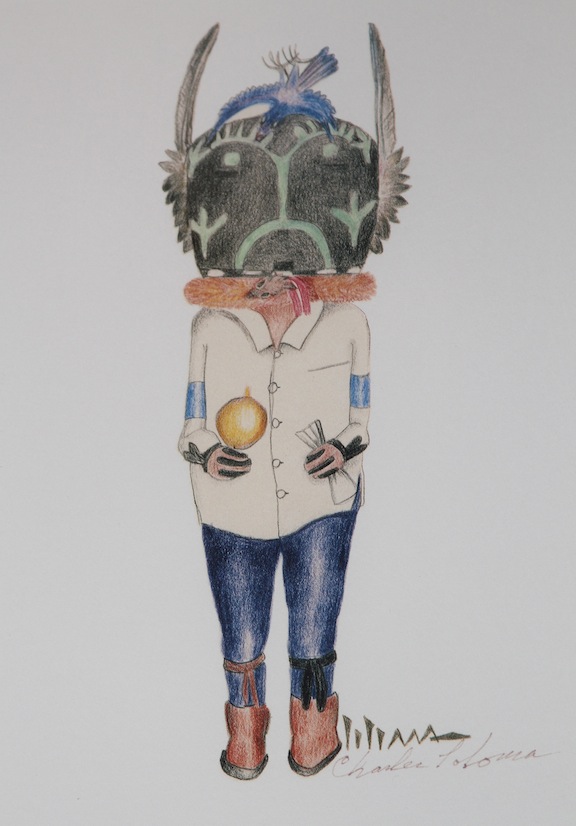
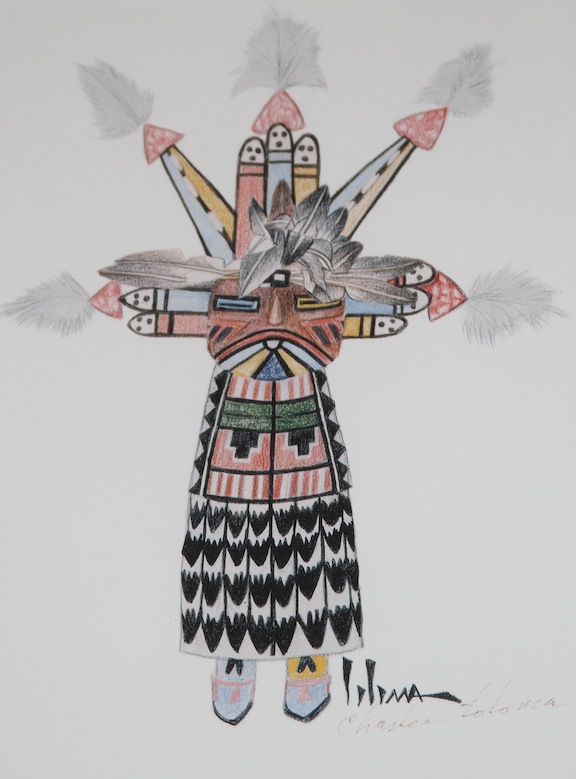
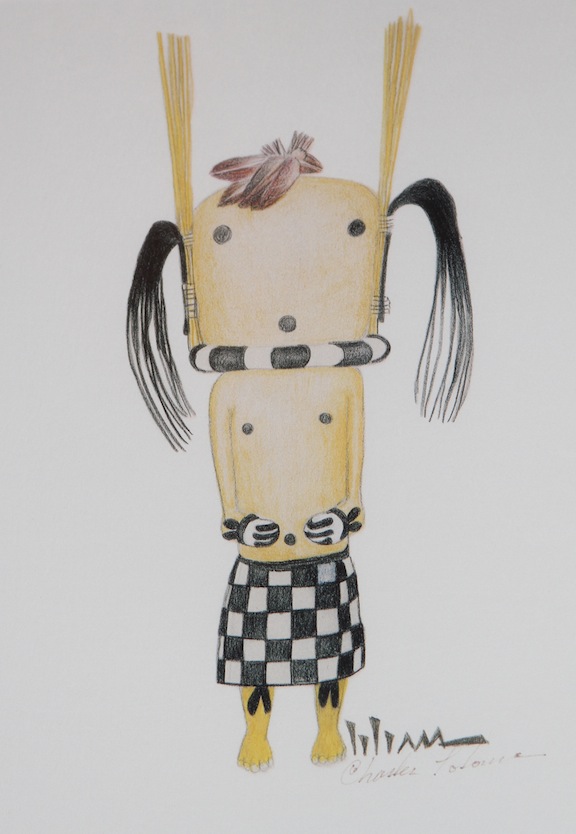
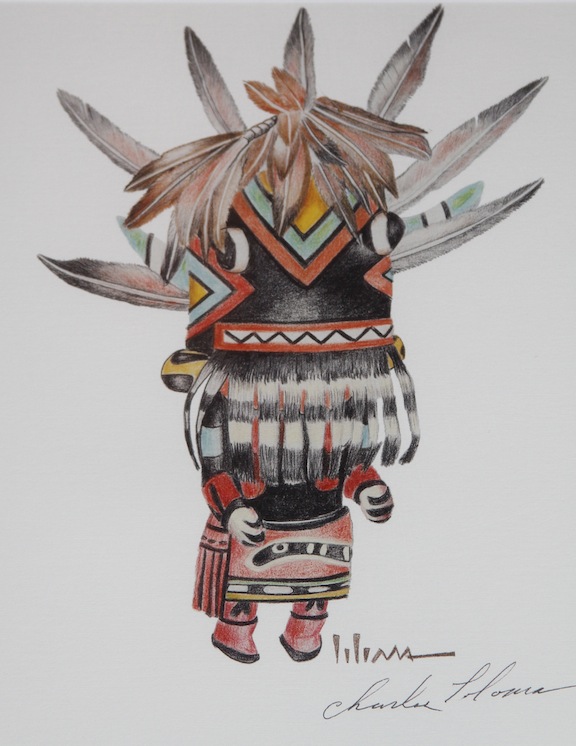
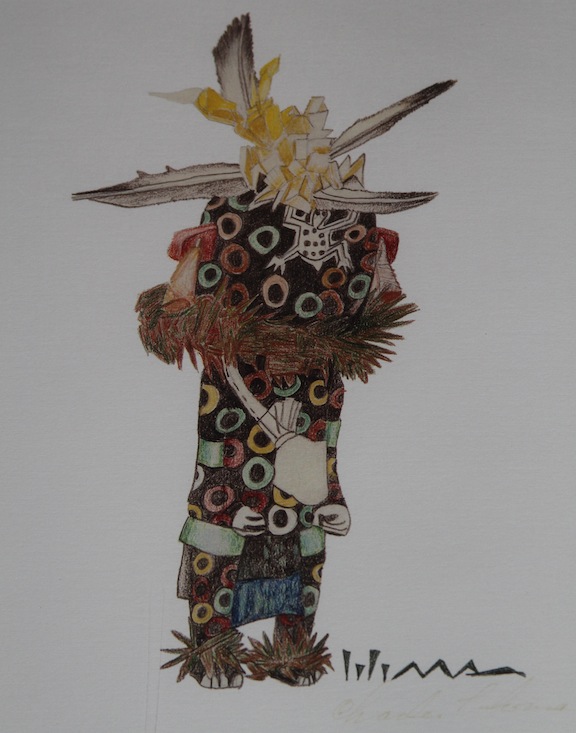
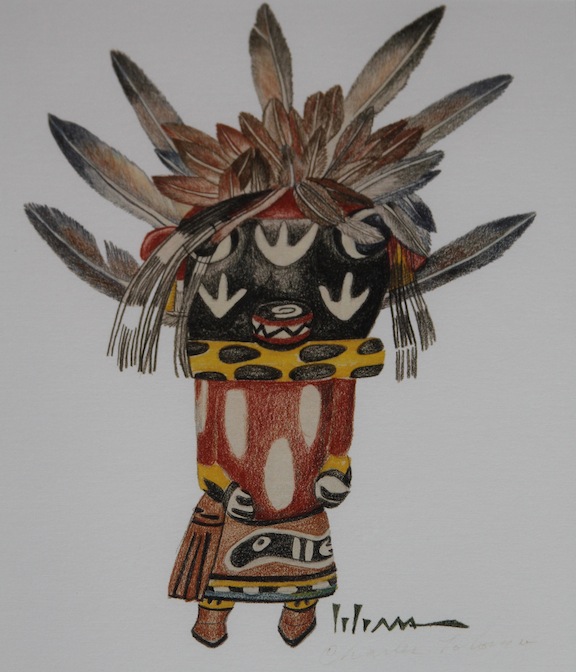
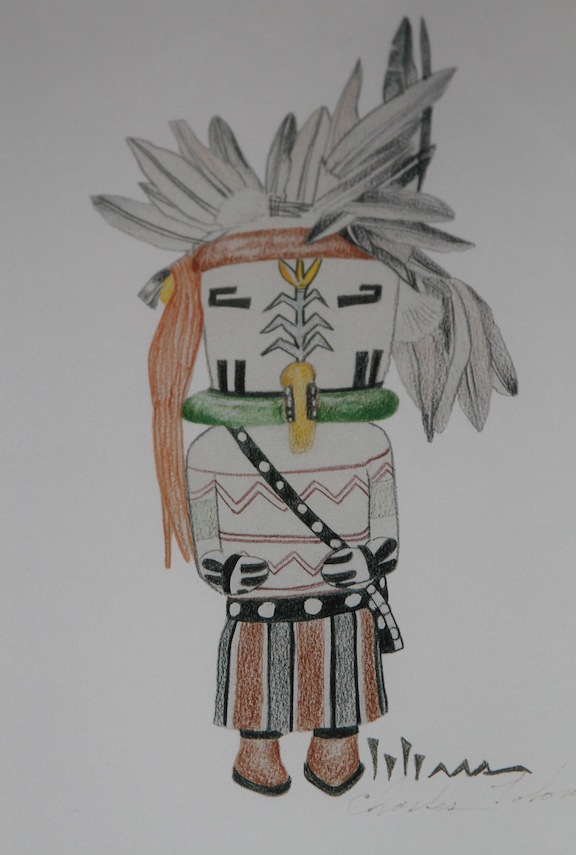
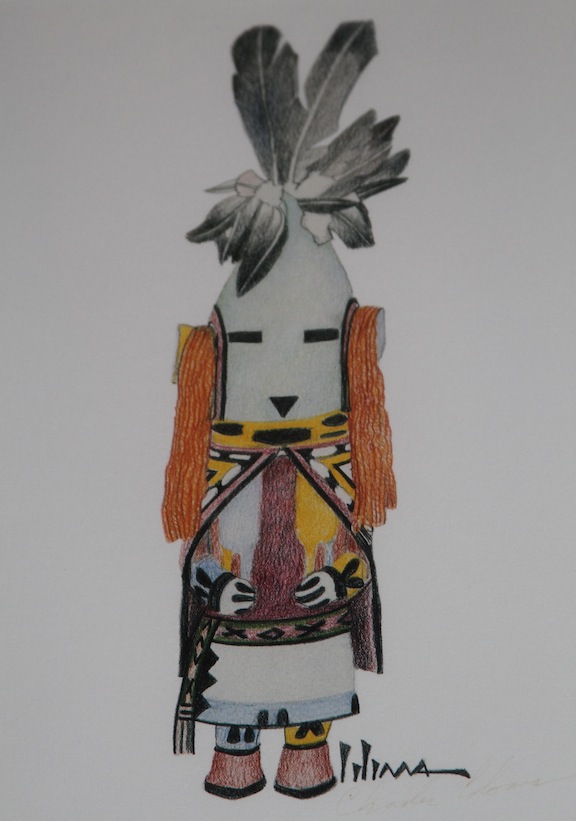
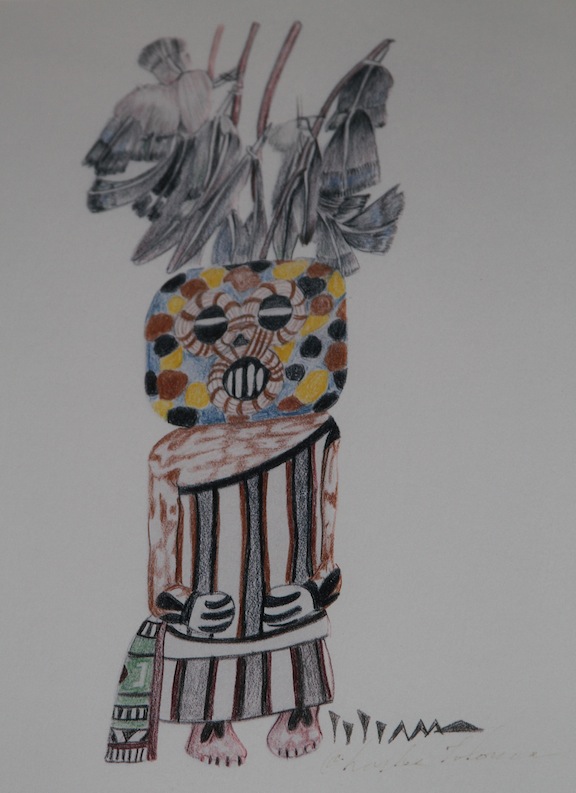
1921–1991. Hopi. Hotevilla, Third Mesa, Arizona.
Charles Loloma is one of the significant American artists of the twentieth century. He worked as a muralist, a potter, and finally as a jeweler, and it is the jewelry that reordered a field.
Biography
He was born on January 7, 1921, at Hotevilla on Third Mesa, and died on June 9, 1991, in Phoenix.
He came to art as a painter. As a young student he worked under Fred Kabotie, and in 1939, still a teenager, he assisted Kabotie on murals for the Federal Building at the Golden Gate International Exposition in San Francisco. Related mural work was seen at the Museum of Modern Art in New York in 1941. He was not yet twenty.
He served in the U.S. Army during the Second World War, part of that time in the Aleutian Islands. Afterward, on the GI Bill, he took a certificate in ceramics in 1949 at the School for American Craftsmen, then at Alfred University in New York, alongside his wife, the potter Otellie Loloma, and held a Whitney Foundation fellowship the same year. He was trained inside a modernist American craft program rather than through an apprenticeship, and he came home with a schooled sense of volume and proportion that had no local precedent.
Through the 1950s he worked in clay, running a pottery studio at Lloyd Kiva New’s craft center in Scottsdale under the name Lolomaware, and turned to jewelry around 1955. The resistance was real. The Gallup Inter-Tribal Ceremonial rejected his entries more than once on the grounds that the work was not sufficiently Indian.
In 1962 New brought him to Santa Fe to join the founding faculty of the Institute of American Indian Arts, where he headed the plastic arts department. He returned to Hotevilla around 1964, built a house and studio, and kept both for the rest of his life, traveling constantly and coming back each time to Third Mesa. He also held standing and responsibilities in his village, which are his family’s to speak about and not a gallery’s.
Recognition came steadily: first prize seven consecutive years at the Scottsdale National Indian Art Exhibition, election to the American Craft Council’s College of Fellows in 1976, and State Department commissions for gifts to visiting heads of state. His work is held by the Heard Museum, the Wheelwright Museum of the American Indian, and the Philbrook Museum of Art. The Wheelwright’s 2005 retrospective and Martha Hopkins Struever’s accompanying monograph, Loloma: Beauty Is His Name, remain the standard reference.
Materials and Technique
The break he made was material before it was formal. Mid-century jewelry in the Southwest ran on silver and turquoise because that is what the trading posts bought and sold. Loloma treated turquoise as one color among many, and usually as an accent rather than the subject. In its place came lapis lazuli, coral, malachite, jade, fossilized ivory and bone, gem-grade sugilite, and dense hardwoods including desert ironwood, ebony, and cocobolo. The first documented ironwood bracelet dates to 1962. He worked in 14k and 18k gold when almost no one in the field was working in gold at all, and added pearls and diamonds in the 1980s.
He built by three methods: tufa casting, in which the mold is carved directly into volcanic tuff and leaves the soft granular surface he liked and kept; lost-wax casting, learned in California in 1957 from Bob Winston; and hand fabrication.
The inlay is the signature, and what he did with it is easy to state and hard to execute. Conventional channel inlay grinds every stone flush to a single plane. Loloma cut his to differing heights, so that an inlaid face rises, steps, and throws its own shadow. He also set stones on edge in stacked bands, so that a cuff reads as strata. He spoke of the profiles of the mesas when he spoke of those elevations, and the comparison holds in front of the objects.
The second innovation is the interior inlay. He set stone on the surfaces no one sees in wear: the inside of a ring shank, the inner wall of a cuff, the back of a buckle or bolo. He called these inner gems, and they are frequently finer than the stones on the outside. The practice is said to have begun with a flawed casting that he inlaid rather than recast, and he kept it afterward as a principle rather than a rescue. It is a design decision that assigns the best material to the wearer alone.
The forms stay consistent once you know them: the triangular shield with softened corners, bracelets built to sit at the apex of the hand, earrings widest at the top.
Marks and Attribution
What is established
He used one mark, his name, LOLOMA, in capitals, applied to the metal and usually placed where it is not seen in wear: the interior of a cuff, the inside of a ring shank, the reverse of a buckle or bolo. Gold pieces generally carry a karat stamp, 14K or 18K, near the name.
What is not established
Trade descriptions use “stamped,” “signed,” and “engraved” interchangeably, sometimes for comparable pieces, and we have found no published study establishing whether he used a single punch throughout, several punches, or hand engraving at different periods. Any confident claim that a letterform dates a piece to a decade should be treated as unproven until someone publishes the sequence. He did not date his work, and no numbering or inventory system is publicly documented.
Dating rests on material and construction, not on the mark
Silver, turquoise, coral, and ironwood dominate the earlier work. Lapis, fossilized ivory, and imported hardwoods enter in the 1970s. Heavy gold, pearls, and diamonds belong largely to the 1980s. Gem-grade sugilite reached the American market only around 1980, so its presence indicates a late piece rather than an early one.
Studio hands
From 1969 his niece Verma Nequatewa worked in the studio as a stone-setter, joined in 1976 by her sister Sherian Honhongva. Eveli Sabatie worked there from 1968 to 1972. Work that left under his mark can reflect their execution as well as his design. That is ordinary for a working studio and is not a defect, but it is worth stating plainly: the mark identifies the studio and the authorship of the design, and it does not certify that one pair of hands cut every stone.
Late work
He was seriously injured in a car accident in September 1986 and could no longer fabricate, though he continued to carve wax models for casting. The studio closed in 1988. Work associated with those final years belongs in its own category and should be described as such.
Where that leaves an owner
There is no catalogue raisonné. Attribution rests on documented provenance, on material and construction consistent with a period, and on the judgment of people who have handled the work in quantity. A mark is where an inquiry begins, not where it ends.
Common Questions
What does a Charles Loloma hallmark look like?
He used one maker’s mark: his name, LOLOMA, in capitals. It is usually placed where it is not seen in wear, on the interior of a cuff, inside a ring shank, or on the reverse of a buckle or bolo. Gold pieces generally carry a 14K or 18K stamp near the name.
Did Charles Loloma date or number his work?
No. He did not date his work, and no numbering or inventory system is publicly documented. Dating rests on material and construction instead. Gem-grade sugilite, for example, reached the American market only around 1980, so its presence indicates a late piece.
What does a LOLOMA mark establish, and what does it not?
The mark identifies the studio and the authorship of the design. It does not certify that one pair of hands cut every stone, since others worked in the studio from 1969 onward. There is no catalogue raisonné, so attribution also rests on documented provenance and on construction consistent with a period.
Webster Collection
Webster Collection has dealt in this material since 1972, from 54½ Lincoln Avenue on the Plaza. We have handled work by Loloma in jewelry and in carving, including a carved and painted cottonwood-root figure that he inscribed by hand in January 1981 and that reached us with Charles Loloma Estate provenance.
We are glad to look at a piece with anyone who owns one, and to be candid about what its provenance and construction can and cannot establish.
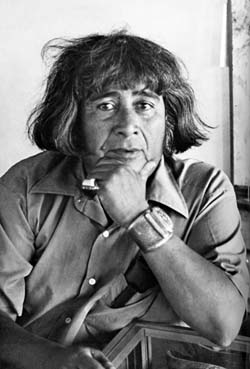
Charles Loloma (1921–1991)
Artist and Jeweler
Hotevilla, Hopi Pueblo, Arizona