David McInnes makes large ceramic vessels that let the making show. The walls are built up in panels, and the seams between them are left in plain sight, so a sunflower or a thorned stem drawn across the surface also crosses the lines of its own construction. He is a Webster Collection artist.
Biography

Dave McInnes (b. 1967) is an American sculptor, ceramicist, and mixed-media artist from New York City. He received a BFA from the New York State College of Ceramics at Alfred University and an MFA from the Milton Avery Graduate School of the Arts at Bard College. His work is held in private collections across the United States.
His current work is hand-built from stoneware clay using slab technique, then fired in an electric kiln. Glazes and raw iron oxides are hand-rubbed and brush-applied.
He lives in Santa Fe, New Mexico, with his wife and two dogs.
The work
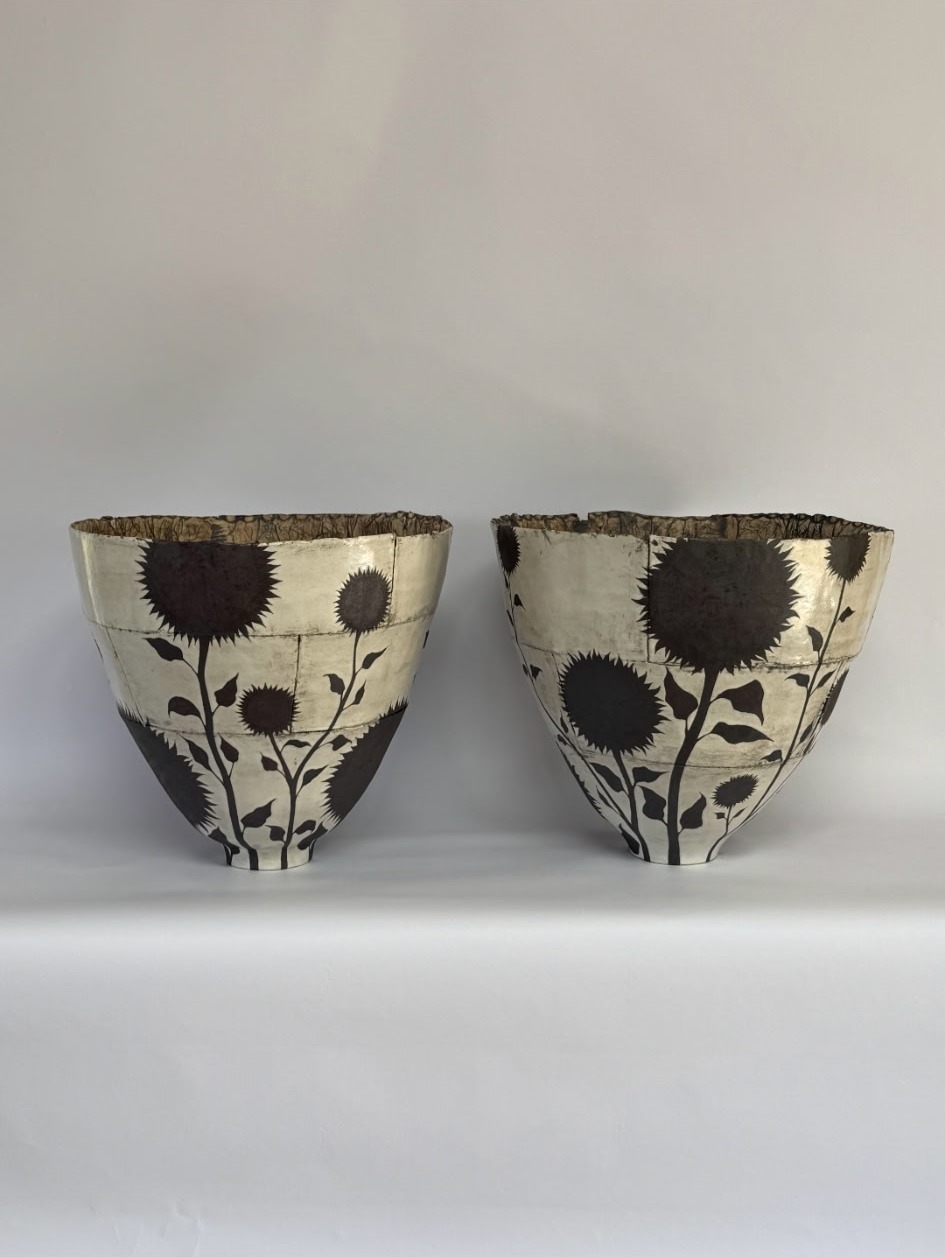
Each vessel rises from a small foot to a wide body, and each is drawn the same way: a single dark line on a pale ground, the plant given as silhouette, with no shading to soften it. The titles name the plant. Sunflower Vase, Thorn Vase, Pod Vase.
In a pair of wide, deep bowls, sunflower heads stand on tall leafed stems against a pale silver ground. The rims are torn rather than trimmed, and where they break they show the rough, textured edge of the wall. The taller ovoid vessels, on a cream ground, carry other plants: thin branching stems ending in round dark pods; heavy black thorned stems climbing from foot to rim, which steps down in a notch; long, fine stems that open into crescent seed heads.
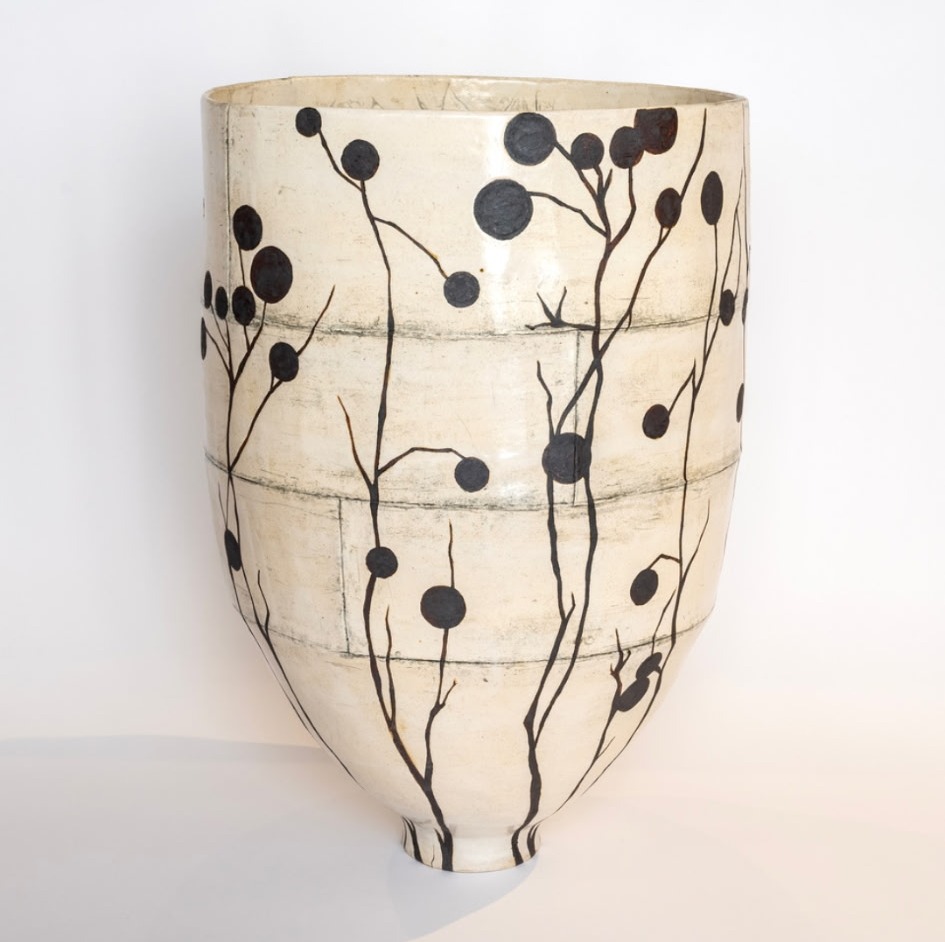
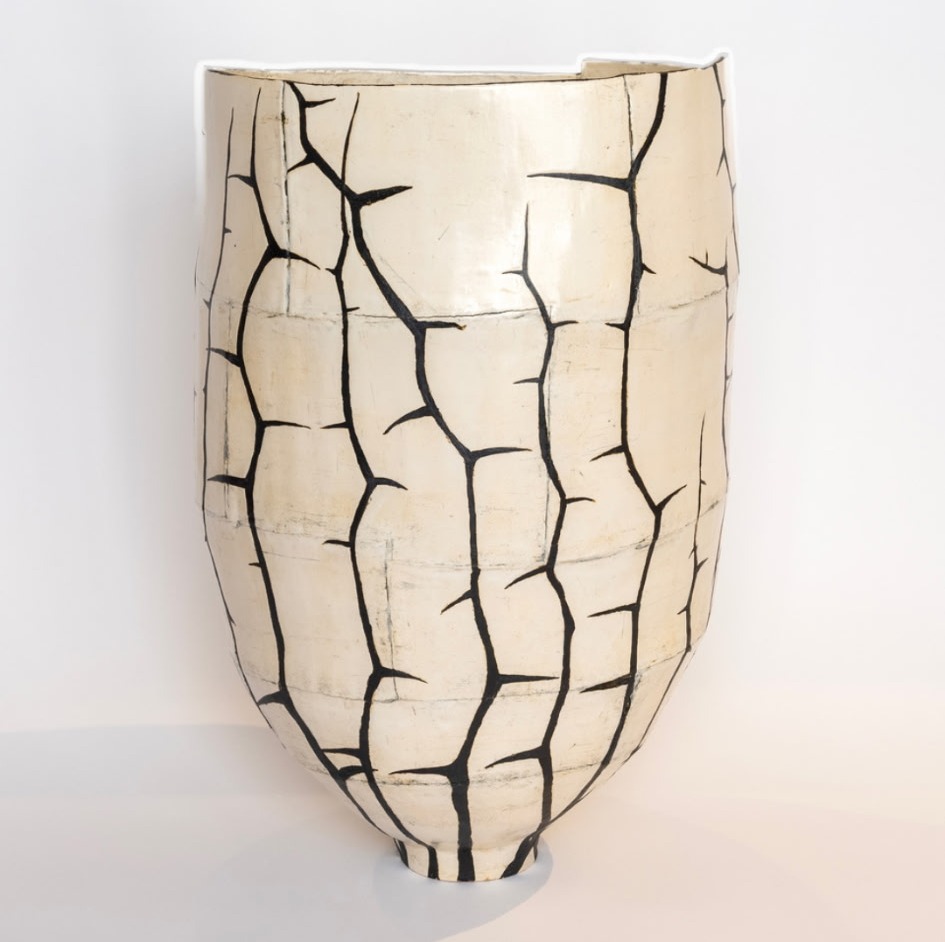
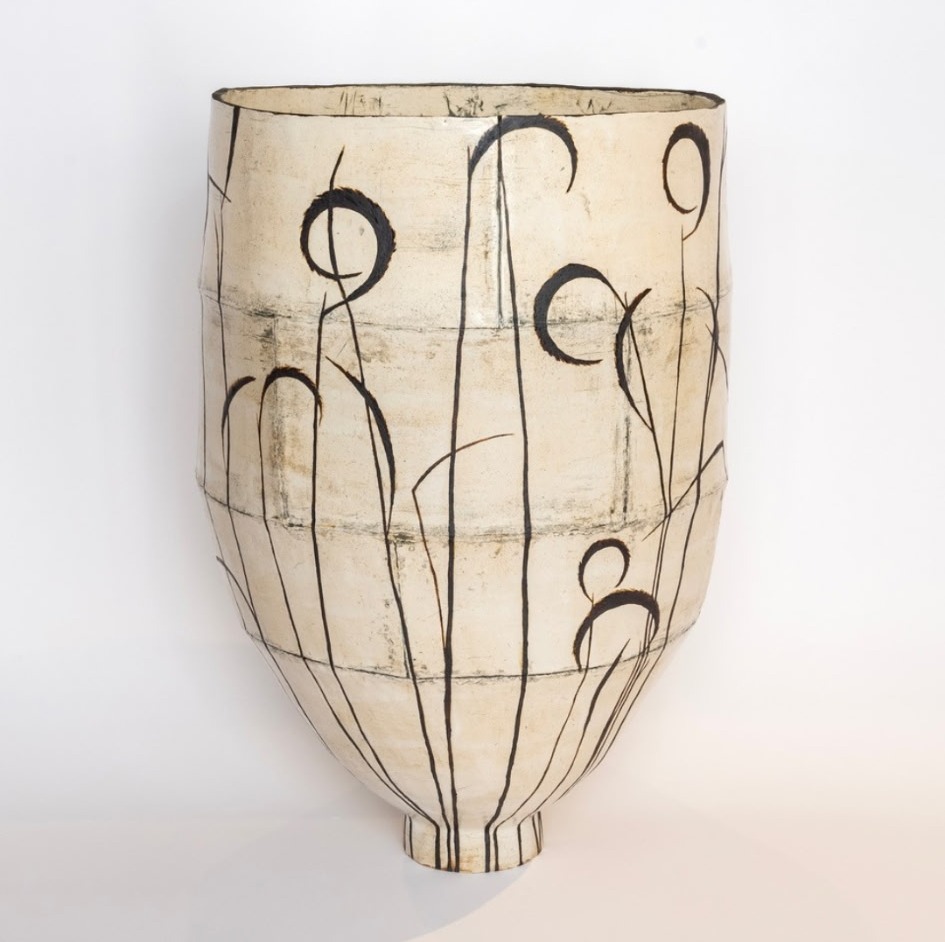
The seams are the other subject. The walls divide into horizontal bands and rectangular panels, and the joins are left visible rather than smoothed away. A stem passes over a seam without pausing. Drawing and structure read as one surface.
In the collection’s words
What draws us to this work is its restraint. One dark line, one pale ground, and nothing hidden about how the vessel came to be. The forms are large, yet they carry their drawing lightly, the way a seed head stands against the sky in late summer.
Webster Collection has lived with objects made by hand since 1972. His vessels belong in that company. They reward the collector who walks around them: the plants continue out of sight, and the seams turn with the wall, so each view of the vessel is a different drawing.
Continue exploring
- Virgil Ortiz, whose practice begins in Cochiti clay, and QUIVER: Vision Beyond Fear at Webster Collection and W Department
- Time in the Clay: Virgil Ortiz at the New Mexico School for the Arts, in The Dispatch
- Yuki Murata, who works in micaceous clay and pigment gathered from the land
- Richard Rhodes and Timeless Form; Stone as Story, for form made by hand in carved stone
- Charles Loloma, who worked as a potter before he turned to jewelry
- Willis F. Lee, whose botanical photogravures also take the plant as their subject
- Flora: A Celebration, Rebirth, Awakening, an earlier exhibition given to flowers
- The Museum of International Folk Art, whose founding collection included ceramics
- All artists at Webster Collection
- All exhibitions at Webster Collection
- W Department, for the design side of the house